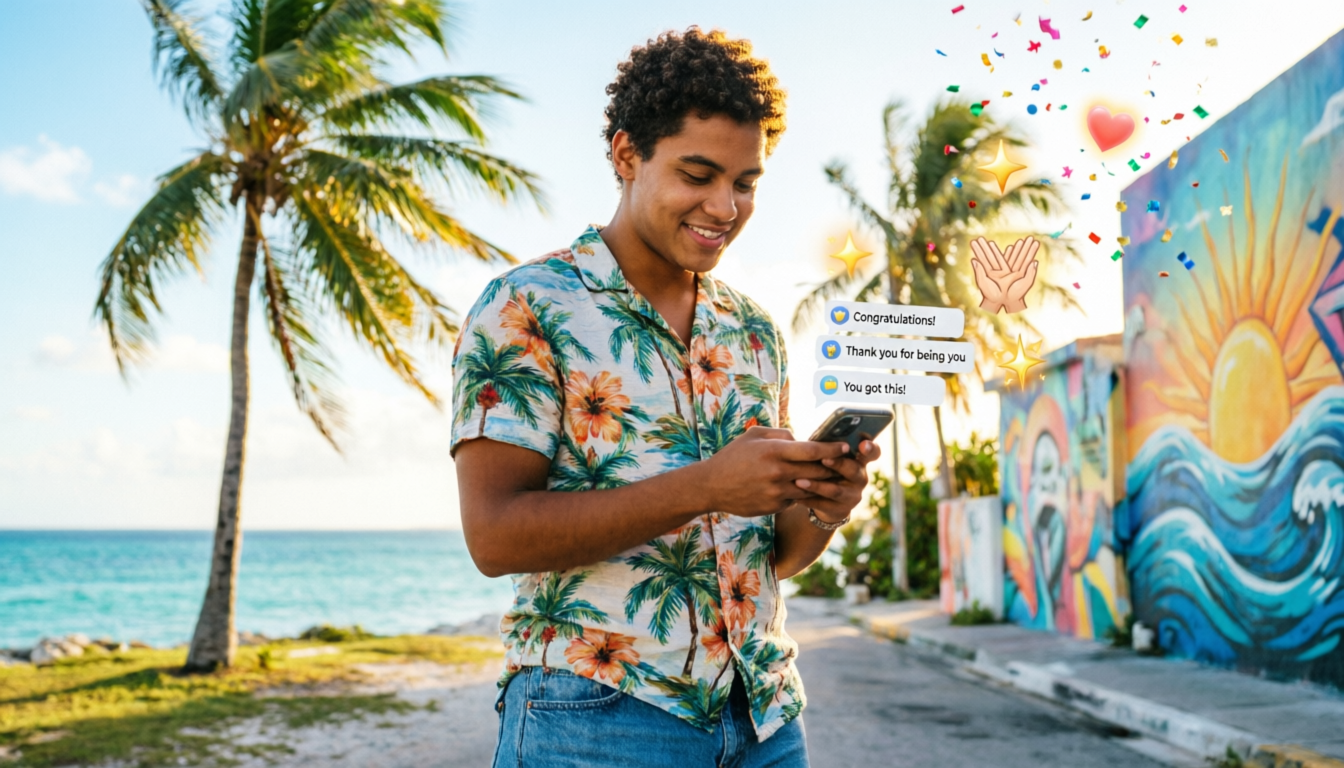
If you’ve spent any time on Instagram, TikTok, YouTube, or even in group chats, you’ve probably come across someone saying bless up. It might appear under a vacation photo, at the end of a thank-you message, or in the comments celebrating someone’s success. Sometimes it sounds heartfelt. Other times it’s playful, funny, or even sarcastic.
That flexibility is exactly why the phrase has stayed popular for years.
Unlike many internet slang terms that disappear as quickly as they appear, bless up has become part of everyday online language. People use it to show appreciation, encourage friends, celebrate achievements, or simply end a conversation on a positive note. Even if you’ve never heard Jamaican Patois before, chances are you’ve seen or heard this expression somewhere.
What many people don’t realize is that bless up didn’t begin as internet slang. Its roots go much deeper. The phrase comes from Jamaican culture, where expressions of blessings, goodwill, and respect are woven into daily conversation. Music carried those expressions around the world, and social media eventually turned one simple phrase into a global phenomenon.
Understanding where it came from makes it much easier to understand why people still use it today.
Quick Answer
Bless up is an informal expression that comes from Jamaican Patois. It is used to wish someone well, express gratitude, show appreciation, offer encouragement, congratulate someone, or simply spread positive energy.
Depending on the situation, it can mean:
- Stay blessed
- Thank you
- Good luck
- Much love
- Congratulations
- Take care
- Respect
- Wishing you the best
Its exact meaning depends on the conversation, but the message is almost always positive.
What Does Bless Up Mean?
One reason this expression has become so popular is that it doesn’t have just one definition.
Instead, its meaning changes naturally depending on who is speaking and what is happening. Think of it as a way of sending positive energy to another person. It can replace several common English expressions without sounding forced.
For example, someone might say:
Thanks for helping me move today. Bless up.
In this case, it simply means thank you.
Another friend might post:
Finally got my dream job. Bless up.
Here, the phrase celebrates success while expressing gratitude.
Someone saying goodbye could write:
See you tomorrow. Bless up.
Now it carries the meaning of take care or stay safe.
Even though these examples are different, they all share one common idea. The speaker is wishing something good for someone else.
That simple idea makes the phrase incredibly versatile.
Different Meanings of Bless Up
Context is everything.
The exact meaning depends on the situation rather than the words themselves.
| Meaning | Example |
|---|---|
| Wishing someone well | Bless up, have a safe trip. |
| Saying thank you | Bless up for helping me today. |
| Showing appreciation | Bless up, I really appreciate it. |
| Celebrating success | You got accepted? Bless up! |
| Encouraging someone | Keep pushing forward. Bless up. |
| Friendly goodbye | Catch you later. Bless up. |
| Showing respect | Bless up to everyone who volunteered. |
Native speakers rarely become confused because the surrounding conversation makes the meaning obvious.
Is Bless Up Religious?
This question comes up often because the word bless has obvious religious connections.
Traditionally, a blessing refers to asking God for protection, guidance, or favor. In many cultures, blessing someone carries deep spiritual meaning.
Today, however, the phrase is often used much more casually.
Millions of people say bless up without intending it as a religious statement. Instead, they simply want to express kindness, gratitude, encouragement, or support.
For some people, especially within Caribbean communities, the spiritual meaning is still very important. Saying bless up reflects genuine faith and a sincere wish that God watches over another person.
For others, it’s closer to saying:
- Take care
- Best wishes
- Good luck
- Much love
Neither use is incorrect.
The intended meaning depends entirely on the speaker and the situation.
Literal Meaning vs Modern Slang Meaning
Looking at how the phrase has evolved helps explain why it feels so natural today.
Originally, blessing someone meant asking for divine protection or favor. It was closely connected to religion and spirituality.
Modern slang has expanded that meaning.
Today, bless up usually communicates positive feelings without requiring any religious belief. It can express appreciation, encouragement, congratulations, gratitude, or hope that good things come someone’s way.
That’s one reason the phrase works so well across different cultures. Whether someone is deeply religious or completely secular, they can still understand the positive intention behind it.
Where Did Bless Up Come From?
Long before hashtags and viral videos existed, bless up was already part of everyday conversation in Jamaica.
The expression comes from Jamaican Patois, an English-based creole language spoken throughout Jamaica. In Jamaican culture, offering blessings is more than a religious act. It’s also a way of showing respect, kindness, and community.
Friends, relatives, neighbors, and even strangers often exchange positive expressions during everyday conversations.
Rather than serving only as formal blessings, these expressions help strengthen relationships and create a sense of warmth between people.
As Jamaican music spread internationally through reggae during the twentieth century, audiences outside the Caribbean began hearing many local expressions for the first time.
Later, dancehall music introduced even more Jamaican vocabulary to listeners around the world.
Words and phrases such as one love, big up, respect, and bless up gradually became familiar to millions of people who had never visited Jamaica.
Most listeners probably didn’t realize where the expressions came from. They simply liked the positive feeling they conveyed.
That international exposure laid the foundation for what would happen next.
Why Jamaican Culture Matters
Understanding the cultural background makes the phrase much more meaningful.
In Jamaica and many other Caribbean communities, everyday speech often emphasizes encouragement, gratitude, respect, and togetherness. Positive expressions aren’t reserved only for special occasions. They’re part of ordinary conversation.
That is one reason bless up feels so genuine.
Instead of being a trendy catchphrase invented for social media, it reflects a long tradition of wishing others well.
As internet culture adopted the phrase, many new users focused only on its popularity while overlooking its origins.
Knowing where it came from allows people to use it with greater appreciation instead of treating it as just another viral expression.
By recognizing its Jamaican roots, you’re also recognizing the culture that introduced one of today’s most positive and widely used slang phrases.
How DJ Khaled Turned Bless Up Into a Global Catchphrase
Although bless up had been part of Jamaican culture for decades, one person helped introduce it to millions of people who had never heard the expression before.
That person was DJ Khaled.
During the mid-2010s, Khaled constantly ended videos, interviews, and social media posts with Bless up! It became one of his signature phrases, alongside his motivational style and larger-than-life personality.
If you followed him on Snapchat during its peak years, you probably heard the phrase almost every day. Fans quickly picked it up, and before long it started appearing everywhere online.
People began using it in:
- Instagram captions
- Twitter posts
- Facebook updates
- YouTube comments
- Snapchat stories
- Memes
- Text messages
For many younger internet users, DJ Khaled became their first introduction to the phrase.
It’s worth remembering, though, that he didn’t invent it. He simply helped bring a long-standing Jamaican expression into mainstream pop culture.
How Bless Up Became Internet Slang
The rise of social media gave bless up a new life.
Unlike many slang terms that only work in one specific situation, this phrase could fit almost anywhere. Someone celebrating a birthday could use it. A traveler posting vacation photos could use it. A student passing an exam could use it.
That flexibility helped it spread faster than many other internet expressions.
Its journey looked something like this:
Jamaican Patois
↓
Everyday expressions of goodwill and blessings
↓
Reggae introduces the phrase to international audiences
↓
Dancehall expands Caribbean influence
↓
Hip-hop artists adopt Jamaican expressions
↓
DJ Khaled popularizes bless up
↓
Snapchat makes it viral
↓
Instagram and Twitter users embrace it
↓
TikTok creators keep it alive
↓
Everyday internet slang across the world
Very few slang expressions survive multiple generations of social media.
Bless up has managed to do exactly that because kindness and encouragement never really go out of style.
How to Use Bless Up Naturally
One of the best things about this phrase is that there aren’t many complicated rules.
You don’t need to force it into every conversation. It works best when you’re genuinely expressing something positive.
Here are the situations where it feels the most natural.
When Someone Helps You
If a friend goes out of their way to do something kind, bless up can be a warm way to show appreciation.
Examples:
Bless up for helping me move today.
Thanks again. Bless up.
I couldn’t have finished without you. Bless up.
In these situations, the phrase works almost like saying I really appreciate it.
When Someone Shares Good News
People often use bless up to celebrate another person’s success.
Examples:
You got promoted? Bless up!
Congratulations on graduating. Bless up.
Your business is doing great. Bless up.
Rather than simply saying congratulations, it adds warmth and positivity.
As a Casual Goodbye
Many people use the expression when ending a conversation.
Instead of saying:
- Take care
- Have a good one
- Stay safe
They simply say:
See you later. Bless up.
Have a great weekend. Bless up.
It feels relaxed without sounding overly formal.
To Encourage Someone
When a friend is having a difficult time, bless up can communicate hope and support.
Examples:
Everything will work out. Bless up.
Keep believing in yourself. Bless up.
Hope tomorrow is better. Bless up.
The phrase offers encouragement without becoming overly emotional.
Bless Up in Text Messages
Texting is probably where you’ll see the phrase most often.
Because written conversations don’t include facial expressions or tone of voice, positive expressions help messages feel friendlier.
For example:
Friend: Thanks for helping me today.
You: Anytime. Bless up.
Another conversation might look like this.
Friend: I finally passed my driving test!
You: Bless up! Congratulations!
Or:
Friend: Appreciate you checking in.
You: Always. Bless up.
Short, positive, and easy to understand.
Bless Up on Social Media
Social media helped transform bless up from a regional expression into a global one.
People often include it in captions celebrating important moments.
Some examples include:
Finally bought my first home. Bless up.
Hard work really pays off. Bless up.
Grateful for another year. Bless up.
Family means everything. Bless up.
Living the dream. Bless up.
Unlike trendy hashtags that disappear after a few weeks, this phrase continues to appear because gratitude never goes out of fashion.
Funny Ways People Use Bless Up
The internet loves exaggerating small victories.
That’s why people often use bless up after completely ordinary events.
For example:
Found an extra fry in my meal. Bless up.
The Wi-Fi finally started working. Bless up.
My phone survived another day without charging. Bless up.
I found the last parking spot. Bless up.
Coffee machine worked on the first try. Bless up.
Nobody actually believes these are life-changing achievements.
The humor comes from acting as though tiny moments deserve huge celebrations.
Using Bless Up Sarcastically
Like many popular slang expressions, bless up can also be used ironically.
Imagine someone saying:
Spent three hours fixing my laptop and now it won’t even turn on. Bless up.
Or:
Missed my train and it’s raining too. Bless up.
In these situations, the speaker isn’t expressing gratitude.
They’re joking about bad luck by pretending it’s something worth celebrating.
Usually, readers understand the sarcasm from the surrounding context rather than the words themselves.
Who Uses Bless Up Today?
Although the phrase started in Jamaica, its audience has expanded dramatically.
Today you’ll hear it from people across many different communities.
Gen Z
Younger users frequently include it in captions, comments, memes, and direct messages.
Millennials
Many Millennials adopted the phrase during the Snapchat era when DJ Khaled’s videos dominated social media.
Caribbean Communities
For Jamaicans and many Caribbean speakers, bless up remains an everyday expression instead of internet slang.
Music Fans
Listeners of reggae, dancehall, Afrobeat, and hip-hop regularly hear the phrase in songs and interviews.
Athletes and Content Creators
Sports stars, YouTubers, streamers, influencers, and podcasters often use bless up when thanking supporters or celebrating achievements.
Bless Up Around the World
Although the expression began in Jamaica, it is now recognized in many English-speaking countries.
Jamaica
The phrase remains a natural part of everyday conversation.
United States
It’s common in music, sports, entertainment, and social media.
Canada
Cities with large Caribbean communities, particularly Toronto, have helped popularize the phrase.
United Kingdom
London and other multicultural cities regularly hear Jamaican expressions thanks to decades of Caribbean influence.
Australia and New Zealand
While less common than in North America, bless up is still widely recognized through music and internet culture.
The phrase may have crossed oceans, but its message has stayed the same.
A simple wish for good things to come someone else’s way.
Bless Up vs. Big Up
Because both expressions come from Jamaican culture, many people assume they mean the same thing. They don’t.
While both are positive, they serve different purposes in conversation.
| Bless Up | Big Up |
|---|---|
| Wishes someone well | Gives someone praise |
| Expresses goodwill | Shows recognition |
| Can mean stay blessed or take care | Means give credit or show respect |
| Focuses on positivity | Focuses on appreciation |
Here are a few examples.
Bless up
Bless up. Have a safe trip.
Thanks for everything. Bless up.
Big up
Big up everyone who volunteered today.
Big up to my parents for always supporting me.
A simple way to remember the difference is this.
Bless up sends good wishes.
Big up gives someone credit.
Bless Up vs. Stay Blessed
These two expressions are similar, but they aren’t interchangeable in every situation.
Stay blessed sounds a little more traditional and often carries a stronger spiritual meaning.
Example:
Take care and stay blessed.
Bless up feels more casual and modern.
Example:
I’ll see you tomorrow. Bless up.
Both are friendly expressions, but bless up is much more common in texting, social media, and casual conversations.
Bless Up vs. Bless You
Another phrase people sometimes confuse with bless up is bless you.
Although they share the word bless, they are used very differently.
Bless you is usually said after someone sneezes. In some situations, it can also be used in a religious context.
Bless up, on the other hand, has a much wider range of meanings. It can express:
- Gratitude
- Encouragement
- Congratulations
- Respect
- Good wishes
- Appreciation
- A friendly goodbye
The two expressions aren’t substitutes for one another.
Common Mistakes People Make
Like any slang phrase, bless up works best when it’s used naturally. Here are a few mistakes to avoid.
Using It in Formal Communication
This expression belongs in casual conversations.
Avoid ending a business email with:
Bless up,
Instead, use standard sign-offs such as:
- Best regards
- Kind regards
- Sincerely
- Best wishes
Professional communication usually calls for more formal language.
Thinking It Only Means Goodbye
Many people assume bless up is simply another way to say goodbye.
In reality, it can also mean thank you, congratulations, good luck, respect, or encouragement.
The surrounding conversation determines its meaning.
Ignoring Its Jamaican Roots
Although the phrase has become part of global internet culture, its origins matter.
Knowing that bless up comes from Jamaican Patois helps people use it respectfully and appreciate the culture that introduced it to the world.
Overusing It
Like any popular expression, using it too often can make it lose its impact.
If every message ends with bless up, it may begin to sound repetitive.
Save it for moments where genuine positivity fits the conversation.
When You Shouldn’t Use Bless Up
Despite its popularity, there are situations where another expression works better.
It’s generally best to avoid using bless up in:
- Job applications
- Professional emails
- Academic papers
- Legal documents
- Business proposals
- Formal reports
- Official customer correspondence
In these situations, clear and professional language is usually the better choice.
Among friends, family members, teammates, or social media followers, however, bless up feels perfectly natural.
Bless Up in Pop Culture
Music played a huge role in spreading bless up beyond Jamaica.
Reggae and Dancehall
Long before social media existed, reggae and dancehall artists regularly used expressions centered on blessings, respect, and community.
International audiences became familiar with many Jamaican phrases simply by listening to the music.
Over time, those expressions found their way into everyday English.
Hip-Hop
Hip-hop has long embraced Caribbean influences, especially in cities with large Jamaican communities.
Artists, producers, and performers helped introduce expressions like bless up to listeners around the world.
As these artists grew in popularity, so did the phrase.
DJ Khaled’s Influence
Few people are more closely associated with bless up than DJ Khaled.
His motivational videos, interviews, and social media posts made the expression instantly recognizable to millions of fans.
Although he didn’t create it, his enthusiasm helped turn it into one of the most recognizable catchphrases of the 2010s.
Social Media Creators
Today, influencers, athletes, gamers, and creators continue using bless up to thank supporters, celebrate milestones, or simply spread positive energy.
Its message still fits naturally across almost every social platform.
Popular Emoji Pairings
People often pair bless up with emojis that reinforce gratitude, celebration, or positive vibes.
Some of the most common combinations include:
- 🙏 Bless up
- 🙌 Bless up
- ❤️ Bless up
- ✨ Bless up
- 🌴 Bless up
- ☀️ Bless up
- 🎉 Bless up
- 💯 Bless up
Among these, the folded hands emoji is probably the most recognizable because it represents appreciation, gratitude, and blessings.
Popular Hashtags
On social media, bless up often appears alongside hashtags focused on gratitude and positivity.
Some of the most common include:
- #BlessUp
- #StayBlessed
- #Grateful
- #GoodVibes
- #PositiveEnergy
- #Thankful
- #Blessed
- #OneLove
- #Respect
- #GoodEnergy
These hashtags frequently accompany travel photos, fitness milestones, family moments, career achievements, and personal celebrations.
Is Bless Up Offensive?
In most situations, no.
People generally see it as a friendly, respectful, and positive expression.
That said, it’s always worth remembering where the phrase comes from.
Because bless up has deep roots in Jamaican culture and Jamaican Patois, it should be used naturally rather than as a stereotype or imitation.
There’s a clear difference between appreciating a phrase and mocking the culture that created it.
Using it sincerely to express gratitude or encouragement is widely accepted.
Does Bless Up Always Mean Stay Blessed?
Not at all.
Depending on the conversation, it can mean:
- Thank you
- Good luck
- Congratulations
- Respect
- Much love
- Take care
- Keep going
- Wishing you well
That’s why context is much more important than trying to assign the phrase a single fixed definition.
Can You Say Bless Up in Everyday Conversation?
Absolutely.
The expression works naturally in casual conversations.
For example:
Friend: Thanks for helping me move.
You: No problem. Bless up.
Or:
Friend: I finally got accepted into college.
You: That’s amazing. Bless up!
Or even:
Friend: I’m heading home.
You: Drive safely. Bless up.
Used sincerely, it sounds warm, supportive, and genuine.
Key Takeaways
If you only remember a few things about bless up, these are the ones that matter most.
- It originated in Jamaican Patois and Caribbean culture.
- It expresses positivity, gratitude, encouragement, respect, or good wishes.
- DJ Khaled helped make it famous worldwide, but he didn’t invent it.
- Today it’s common in texting, social media, music, and casual conversations.
- It works best in informal settings rather than professional communication.
- Understanding its cultural background helps you use it respectfully and naturally.
Final Thoughts
Few slang expressions manage to stay relevant for years, yet bless up continues to thrive because its message never goes out of style.
At its heart, the phrase is about wishing good things for someone else. Whether you’re thanking a friend, celebrating an achievement, encouraging someone through a difficult moment, or simply ending a conversation on a positive note, those two words communicate warmth in a way that feels effortless.
Language is constantly changing. New slang appears every year, and much of it disappears just as quickly. Bless up has followed a different path. Instead of fading away, it has grown from a local Jamaican expression into a phrase recognized around the world.
Its popularity isn’t built on trends alone. It’s built on something people always appreciate: kindness, gratitude, respect, and encouragement.
The next time someone shares good news, lends you a helping hand, or simply deserves a little positivity, you’ll know exactly when to say it.
Bless up.
Frequently Asked Questions
What does bless up mean in texting?
In text messages, bless up usually means thank you, take care, stay blessed, much love, or wishing you well. The exact meaning depends on the context of the conversation.
Is bless up Jamaican?
Yes. The phrase comes from Jamaican Patois and has been used in Jamaican and Caribbean culture for many years before becoming popular worldwide.
Who made bless up famous?
DJ Khaled helped popularize bless up during the mid-2010s through his music, interviews, Snapchat videos, and social media posts. However, he did not create the phrase.
Is bless up religious?
It can be, but it doesn’t have to be. Some people use it as a sincere spiritual blessing, while others simply use it as a friendly way to express gratitude, encouragement, or goodwill.
Can I use bless up at work?
It’s fine in casual conversations with coworkers if your workplace is informal. For professional emails, presentations, or official business communication, expressions like best wishes or kind regards are more appropriate.
Is bless up still popular?
Yes. While it became especially popular during the Snapchat era, it remains common on Instagram, TikTok, X, Facebook, YouTube, and in everyday conversations because its positive message is timeless.
Is bless up the same as big up?
No. Bless up wishes someone well or expresses gratitude, while big up is used to praise, recognize, or give credit to someone.
Can bless up be used sarcastically?
Yes. People sometimes use it ironically after small frustrations or minor victories.
For example:
Spent an hour looking for my keys and they were in my pocket the whole time. Bless up.
The humor comes from treating an ordinary or frustrating moment like a major achievement.
