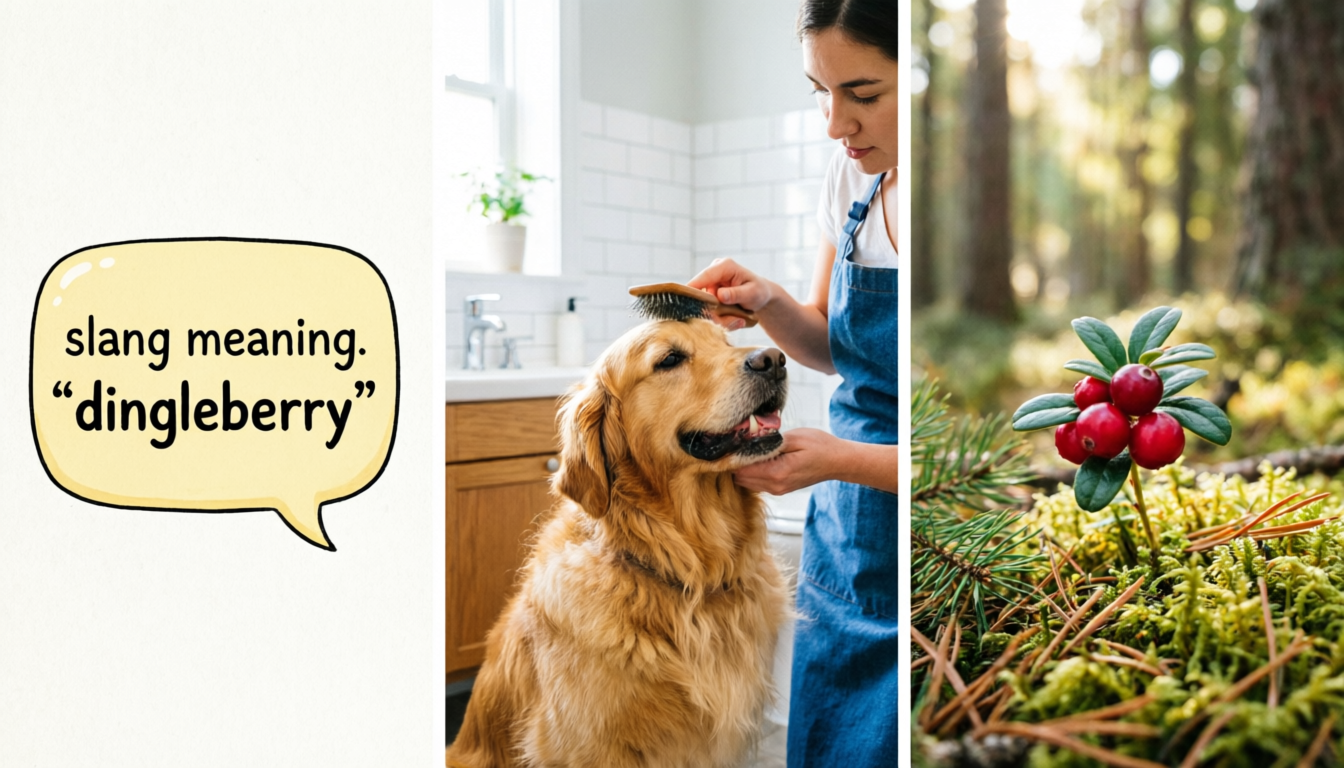
Have you ever heard someone jokingly call a friend a dingleberry and wondered what it actually means? Or maybe you searched the word after seeing it in a pet care article or hearing it in a comedy show. The answer depends completely on the context.
For most people, dingleberry refers to a small piece of dried fecal matter caught in hair around the anus. It is an unpleasant but surprisingly common hygiene issue that can affect both humans and animals. However, the same word is also used as a playful insult for someone acting foolish. In a much less common context, it refers to a wild cranberry native to parts of the southeastern United States.
This combination of meanings explains why the word appears in many different places, from veterinary advice and medical discussions to internet memes and everyday conversations.
This guide explores every meaning of dingleberry, its origin, how people use it today, why it happens, and how to prevent it.
Dingleberry at a Glance
Meaning Context Example
Dried feces caught in hair Personal hygiene He found a dingleberry after hiking.
Feces trapped in a pet’s fur Pet grooming The groomer removed several dingleberries.
A foolish or annoying person Informal slang Quit being such a dingleberry.
A wild cranberry Botany Dingleberries grow naturally in mountain forests.
Although these meanings seem unrelated, all of them are recognized in modern English dictionaries.
How Do You Pronounce Dingleberry?
Pronunciation:
DIN-guhl-ber-ee
Phonetic spelling:
/ˈdɪŋ-gəl-ˌber-i/
The plural form is dingleberries.
The word is used as a noun.
Examples:
My dog came inside with a dingleberry.
Don’t be a dingleberry.
We found dingleberries growing in the mountains.
What Does Dingleberry Mean?
Most people immediately think about hygiene when they hear the word.
A dingleberry is a small piece of dried stool that becomes trapped in hair around the anus after a bowel movement. Instead of separating completely, some waste sticks to nearby hair and slowly dries into a firm clump.
Although the topic often becomes the subject of jokes, the condition itself is real. It can happen to adults, children, dogs, cats, and other furry animals.
Medical professionals usually do not use the word dingleberry. Instead, they describe the issue with terms such as fecal residue, retained stool, or poor perianal hygiene.
The Three Different Meanings of Dingleberry
Many people know only one meaning of this unusual word, but dingleberry has several recognized uses.
- The Hygiene Meaning
This is the most common meaning today.
A dingleberry describes dried fecal matter trapped in hair around the anus.
Common causes include:
Long body hair
Diarrhea
Incomplete wiping
Reduced mobility
Excessive sweating
Poor grooming habits
Although embarrassing, it is usually easy to prevent with proper hygiene.
- Dingleberry as a Slang Insult
In casual American English, dingleberry is also used as a funny nickname for someone acting silly, careless, or mildly annoying.
Unlike stronger insults, it usually has a playful tone.
Examples:
Nice job, dingleberry. You parked in the wrong spot.
Stop acting like a dingleberry and help.
Parents sometimes use it jokingly with children, while friends may use it when teasing each other.
Because the word sounds childish and harmless, it usually feels much softer than insults like idiot or moron. Still, it is not suitable for professional conversations.
- The Botanical Meaning
One of the least-known meanings surprises many people.
Dingleberry is also a name used for a wild cranberry species known scientifically as Vaccinium erythrocarpum.
This plant grows naturally in wooded mountain regions of the southeastern United States.
The berries are:
Dark red
Edible
Tart
Similar to cranberries
Today, this meaning is mostly familiar among gardeners, hikers, and people interested in plant identification.
Where Did the Word Dingleberry Come From?
The exact origin of dingleberry is not completely clear.
Language researchers believe the word developed during the early twentieth century and may have connections to older slang terms such as dilberry or dillberry, which were linked to similar meanings.
Over time, the word expanded beyond its original use.
The development likely happened something like this:
1920s: Used as a name for a wild cranberry.
Later years: Became associated with dried fecal matter.
Eventually: Developed into a humorous insult for a foolish person.
Today: Appears in memes, television shows, gaming conversations, parenting jokes, and pet-care discussions.
The insulting meaning likely developed because comparing someone to the literal meaning of dingleberry creates a humorous image. Nobody wants to be associated with something unpleasant, which made the insult memorable.
Why Is Dingleberry Common in Pet Care?
If you have owned a long-haired dog, you may have heard this word from a veterinarian or groomer.
Dogs with thick coats can easily collect stool in the fur beneath their tails.
Common breeds that experience this problem include:
Shih Tzu
Maltese
Poodle
Lhasa Apso
Havanese
Old English Sheepdog
Bernese Mountain Dog
Cats can experience the same issue, especially long-haired breeds such as Persians and Maine Coons.
Professional groomers often perform a sanitary trim, which means carefully removing excess fur around the rear area to reduce buildup.
Human vs. Pet Dingleberries
The problem may look similar, but the causes are slightly different.
Humans Pets
Body hair Thick fur
Incomplete wiping Long coat collects stool
Diarrhea Loose stool
Mobility issues Matted fur
Poor hygiene Lack of grooming
Digestive disorders Diet changes or illness
Understanding these differences helps explain why prevention methods vary between people and animals.
Is a Dingleberry Dangerous?
Usually, no.
Most cases are simply a hygiene problem.
However, leaving dried stool attached for a long time can cause:
Skin irritation
Itching
Bad odor
Bacterial growth
Painful matting
Inflammation
Discomfort while walking
For pets, neglected dingleberries may attract flies, cause infected skin, or hide larger health issues such as diarrhea or anal gland problems.
That does not mean every case requires emergency care, but it should not be ignored.
Why Do Dingleberries Form?
A dingleberry develops when stool does not separate completely after a bowel movement and becomes trapped in nearby hair. Several factors can increase the chances of this happening.
Long Hair Around the Anus
Hair naturally collects moisture and soft stool. As the material dries, it becomes harder and forms a small clump.
This is one reason long-haired pets are more likely to develop dingleberries. The same issue can happen in humans with more body hair.
Loose Stools or Diarrhea
Soft stool sticks more easily than firm, well-formed stool.
Even people with excellent hygiene can experience dingleberries during periods of diarrhea, stomach infections, or digestive problems.
Incomplete Cleaning
Rushing after using the bathroom or failing to clean thoroughly can leave behind small amounts of residue that later dry and become trapped in hair.
Heavy Body Hair
People with thicker body hair may experience this problem more often because there is more surface area where stool can collect.
Preventing Dingleberries: Simple Habits That Help
Most dingleberries are preventable. Small changes in personal hygiene or pet grooming routines can greatly reduce the chances of them forming.
The basic goal is simple: keep the area clean, dry, and free from excess hair that can trap stool.
For Adults
Good bathroom habits are the first step.
Helpful practices include:
- Cleaning thoroughly after every bowel movement
- Using extra toilet paper if needed until the area is clean
- Washing the area with water when possible
- Drying the skin properly instead of leaving moisture behind
- Trimming excessive hair if it frequently traps stool
- Showering regularly, especially after diarrhea or heavy sweating
People who frequently experience loose stools should also look into the cause rather than only focusing on cleaning afterward.
Are Wet Wipes Better Than Toilet Paper?
Many people prefer unscented wet wipes because they can remove sticky residue more effectively than dry toilet paper.
Wet wipes may help by:
- Removing leftover residue
- Reducing irritation caused by excessive wiping
- Providing a cleaner feeling
However, there are a few things to consider.
Not every product labeled flushable breaks down properly in plumbing systems. Some scented wipes may irritate sensitive skin, and alcohol-based wipes can cause dryness.
For many people, plain water or a bidet can be a gentler option.
Bidets and Personal Hygiene
Bidets have become increasingly popular because they clean with water instead of relying only on toilet paper.
People who use bidets often notice:
- Better cleanliness
- Less irritation
- Reduced toilet paper use
- Improved comfort after using the bathroom
A bidet is not required for everyone, but it can be especially useful for people with mobility issues, digestive concerns, or recurring hygiene problems.
Does Diet Affect Dingleberries?
Yes. Stool consistency plays a major role.
Well-formed stools are much less likely to stick to hair compared with loose or sticky stools.
A balanced diet can support healthier digestion.
Foods that may help include:
- Fruits
- Vegetables
- Whole grains
- Oats
- Beans
- Lentils
- Yogurt containing probiotics
Drinking enough water also helps maintain regular bowel movements.
On the other hand, frequent diarrhea, food intolerances, or digestive disorders can make dingleberries more likely.
Medical Conditions That Can Increase Risk
Sometimes the issue is not simply about hygiene.
Certain health conditions may contribute, including:
- Irritable bowel syndrome (IBS)
- Inflammatory bowel disease (IBD)
- Chronic diarrhea
- Crohn’s disease
- Ulcerative colitis
- Food poisoning
- Temporary stomach infections
People recovering from surgery or those with limited movement may also have difficulty cleaning themselves properly.
If dingleberries happen regularly despite good hygiene, it may be worth discussing the issue with a healthcare professional.
Can Children Get Dingleberries?
Yes.
Children are especially likely to experience them while learning proper bathroom habits.
Common reasons include:
- Not wiping completely
- Rushing bathroom visits
- Diarrhea
- Inconsistent cleaning habits
Parents can help by teaching children proper wiping techniques and encouraging handwashing after every bathroom visit.
Younger children who still need help may benefit from a quick cleanliness check before leaving the bathroom.
What About Older Adults?
Older adults may experience dingleberries more often because of:
- Arthritis
- Reduced flexibility
- Limited mobility
- Vision problems
- Chronic digestive issues
Some individuals may need assistance with personal hygiene. When helping someone, maintaining comfort, privacy, and dignity is important.
Safe Ways to Remove a Dingleberry
Removing a dingleberry is usually simple, but it should be done carefully to avoid irritating the skin.
For Humans
If the stool has already dried:
- Wash your hands.
- Soften the area with warm water.
- Use a damp washcloth or gentle tissue.
- Avoid pulling hard on hair.
- Clean the area with mild soap if necessary.
- Dry thoroughly afterward.
If hair repeatedly traps stool, carefully trimming the area may help prevent future problems.
For Dogs
Never pull dried stool aggressively from a dog’s fur.
Instead:
- Soak the area with warm water
- Gently loosen the dried material
- Carefully trim matted fur if needed
- Clean the skin afterward
- Reward the dog for staying calm
Many owners choose professional grooming because groomers are experienced with sanitary trims and difficult mats.
For Cats
Cats can be more difficult to handle because many dislike grooming around sensitive areas.
Long-haired cats may need:
- Regular brushing
- Occasional trimming
- Frequent checks beneath the tail
- Professional grooming if mats develop
If a cat repeatedly gets dingleberries, a veterinarian can help determine whether the cause is digestive problems, weight issues, or another health concern.
Dog Breeds More Likely to Get Dingleberries
Any dog with long or thick fur can develop this problem, but some breeds need extra attention.
Common examples include:
- Shih Tzu
- Maltese
- Poodle
- Bichon Frise
- Lhasa Apso
- Havanese
- Old English Sheepdog
- Collie
- Bernese Mountain Dog
- Goldendoodle
Dogs with curly or dense coats often trap debris more easily than short-haired breeds.
Cat Breeds That May Need Extra Grooming
Long-haired cats are more likely to develop fur-related hygiene issues.
Breeds that may require extra care include:
- Persian
- Maine Coon
- Himalayan
- Norwegian Forest Cat
- Ragdoll
Regular brushing helps prevent mats that can collect stool near the tail area.
Warning Signs You Should Not Ignore
Occasional dingleberries are usually harmless.
However, repeated problems combined with other symptoms may suggest an underlying issue.
Watch for:
- Blood in stool
- Severe diarrhea
- Ongoing constipation
- Painful bowel movements
- Swelling around the anus
- Pus or discharge
- Unexpected weight loss
- Fever
- Repeated skin infections
For pets, additional warning signs include:
- Scooting across the floor
- Excessive licking
- Crying during bowel movements
- Strong unpleasant odor
- Swollen anal glands
- Loss of appetite
These signs may require medical or veterinary attention.
Common Misunderstandings About Dingleberry
Because dingleberry has multiple meanings, people often misunderstand what the word actually refers to.
Myth: Dingleberry is only a joke
Fact: The hygiene meaning is real and affects both humans and animals. Although people often laugh about it, it is a genuine grooming and cleanliness issue.
Myth: Only pets get dingleberries
Fact: Humans can experience them too. People with more body hair, loose stools, diarrhea, or difficulty cleaning properly may be more likely to develop them.
Myth: Dingleberries always mean poor hygiene
Fact: A dingleberry does not automatically indicate someone is unhygienic. Even people with good hygiene can experience the problem during stomach illness, diarrhea, or digestive changes.
Myth: Dingleberries are always dangerous
Fact: Most cases are harmless and simply require cleaning. However, repeated problems may point to digestive issues, skin irritation, or other health concerns.
Myth: Everyone knows dingleberry as an insult
Fact: Some people recognize the word only as a hygiene term, while others have only heard it used as a funny insult.
How Dingleberry Became a Popular Funny Insult
Language often turns unpleasant ideas into humor, and dingleberry is a perfect example.
The insult likely became popular because the literal meaning creates an awkward and ridiculous image. Calling someone a dingleberry compares their behavior to something annoying and undesirable, but the childish sound of the word keeps it from feeling too harsh.
Unlike serious insults, dingleberry often suggests that someone made a silly mistake rather than that they are genuinely unintelligent.
For example:
You forgot to charge your phone before leaving? What a dingleberry.
In this situation, the speaker is usually criticizing the action, not attacking the person’s character.
Why Do People Like Using Funny Insults?
Words like dingleberry, goofball, and knucklehead remain popular because they allow people to tease without creating unnecessary conflict.
A playful insult can:
Show familiarity between friends
Add humor to conversations
Make criticism feel lighter
Create a shared joke
The key difference is the relationship between the people using the word. A close friend saying it with a smile may sound funny. A stranger saying it aggressively may sound rude.
Is Dingleberry Still Used Today?
Yes.
Although it is not one of the most common slang words, dingleberry continues to appear in:
Comedy shows
Movies
Social media posts
Online gaming chats
Pet-care discussions
Family conversations
Its unusual sound helps it stay memorable. Many older slang words disappear over time, but dingleberry survives because it has a strange combination of humor, awkwardness, and multiple meanings.
Dingleberry in Pop Culture
The word has appeared in different forms of entertainment, especially when writers want a silly insult that feels harmless.
Characters in comedy shows often use words like dingleberry because they sound exaggerated and funny without being offensive.
It works well for:
Cartoon characters
Family-friendly comedy
Sitcom arguments
Internet jokes
Gaming humor
The word’s playful nature makes it suitable when stronger language would not fit the situation.
The Interesting Story Behind a Strange Word
Dingleberry is a good example of how English changes over time.
A single word can move between completely different areas:
Nature
Hygiene
Slang
Internet culture
The botanical meaning connects it to a wild cranberry. The hygiene meaning connects it to everyday grooming. The slang meaning connects it to humor and social interaction.
Most words have one main purpose, but dingleberry developed several identities.
That is what makes it an interesting piece of everyday language.
Final Thoughts
Dingleberry may sound like a silly word from a joke, but it has a surprisingly detailed history and several meanings.
Most commonly, it refers to dried stool trapped in hair around the anus, a problem that can affect both humans and animals. In pet care, it is a common grooming issue, especially among long-haired dogs and cats. With proper cleaning, regular grooming, and attention to digestive health, most cases can be prevented easily.
The word also lives on as a playful insult for someone acting foolish or careless. Unlike harsher insults, dingleberry usually carries a humorous tone and is often used between friends, family members, and online communities.
Then there is the lesser-known botanical meaning: a wild cranberry species called Vaccinium erythrocarpum.
Understanding the context is the key. A veterinarian, a gardener, and a person joking with a friend may all use the word dingleberry, but they are talking about completely different things.
It is a strange little word with an unusual journey through language, culture, and everyday life.
Frequently Asked Questions About Dingleberry
What is a dingleberry?
A dingleberry is most commonly a small piece of dried fecal matter trapped in hair around the anus. The word can also refer to a foolish person in slang or a type of wild cranberry in botany.
Why do people get dingleberries?
Dingleberries usually form when stool becomes trapped in hair after a bowel movement. Long hair, diarrhea, loose stools, and incomplete cleaning can increase the chances of developing one.
Can short-haired people get dingleberries?
Yes. It is less common, but short-haired people can still experience the problem, especially during diarrhea or digestive issues.
Can dogs get dingleberries?
Yes. Long-haired dogs are especially likely to develop them because fur around the tail area can trap stool.
Which dogs are most likely to get dingleberries?
Breeds with long, thick, or curly coats are more prone. Examples include Shih Tzus, Maltese, Poodles, Lhasa Apsos, and Goldendoodles.
Can cats get dingleberries?
Yes. Long-haired cats such as Persians and Maine Coons may develop them if their fur is not regularly brushed or trimmed.
Are dingleberries a sign of poor hygiene?
Not always. They can happen because of diarrhea, digestive problems, body hair, or pet fur. Good hygiene reduces the risk but does not completely eliminate it.
Are dingleberries dangerous?
Usually, no. Most cases are harmless and can be removed with proper cleaning. However, repeated cases may indicate an underlying health or grooming issue.
How do you remove a dingleberry safely?
The best approach is to soften it with warm water and gently remove it. Avoid pulling hard, especially when hair is involved, because this can irritate the skin.
Is dingleberry a swear word?
No. Dingleberry is considered mild slang rather than profanity. It is usually a playful insult, although it may not be appropriate in professional .
Where did the insult dingleberry come from?
The insult likely developed from the literal hygiene meaning. Because the original meaning was unpleasant, it became a humorous way to describe someone acting foolish.
Is dingleberry a real berry?
Yes. Dingleberry is also a name for Vaccinium erythrocarpum, a wild cranberry species found in parts of the southeastern United States.
Can diet help prevent dingleberries?
Yes. A diet that supports healthy digestion can help create firmer stools that are less likely to stick to hair.
When should someone see a doctor about dingleberries?
Medical advice may be helpful if the problem keeps happening along with symptoms such as bleeding, severe diarrhea, pain, weight loss, or skin infections.
When should a pet see a veterinarian?
A pet should be checked if dingleberries occur repeatedly, especially with diarrhea, bleeding, excessive licking, scooting, anal gland problems, or changes in appetite.
Is dingleberry commonly used in texting?
It is not as common as abbreviations like LOL or BRB, but people sometimes use it in messages as a playful way to call someone silly or goofy.
What does dingleberry mean in a sentence?
The meaning depends on context.
Example:
The groomer removed a dingleberry from the dog’s fur.
Here it means trapped stool.
You are such a dingleberry.
Here it means a silly or foolish person.
