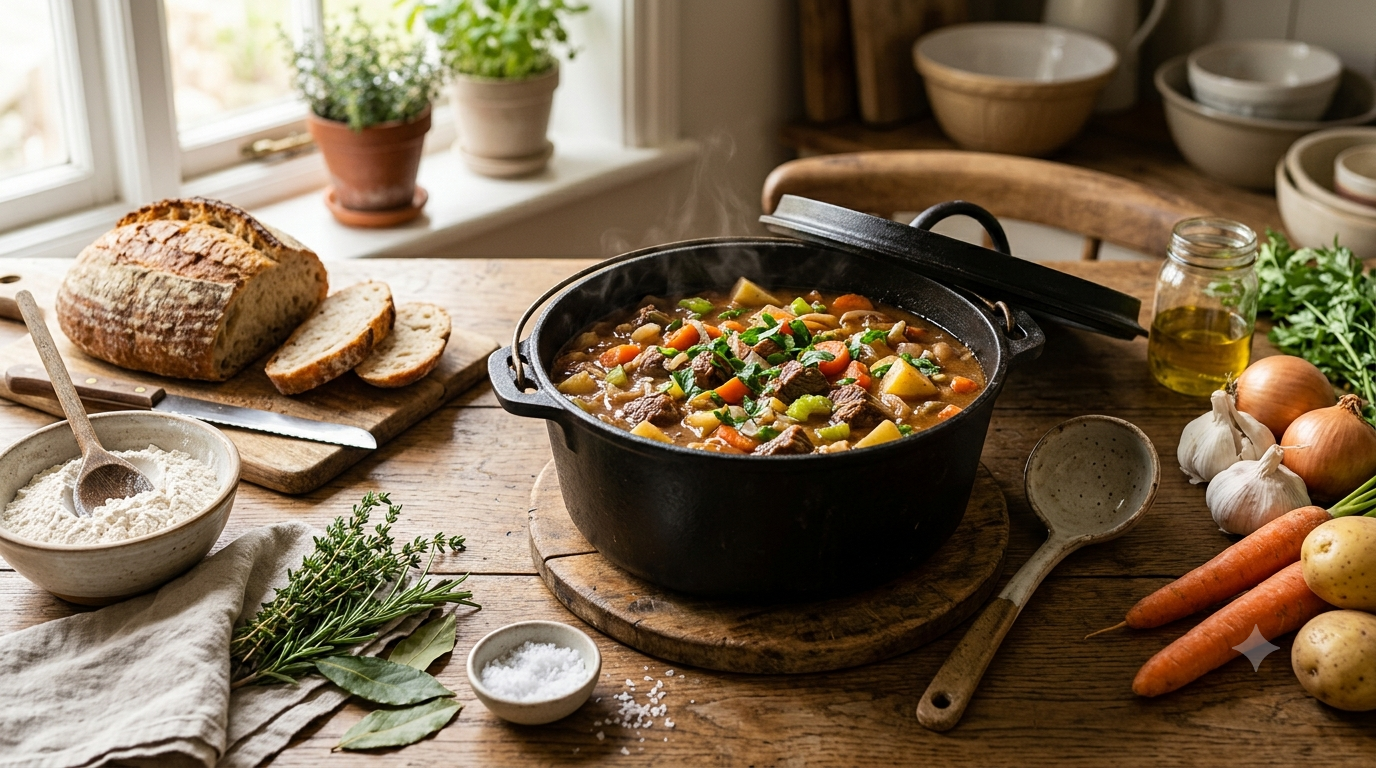
A Dutch oven is a versatile cooking vessel built to provide excellent heat control and moisture retention. It looks like a large, heavy pot with a thick base, strong handles, and a tightly sealed lid.
The main purpose of a Dutch oven is to create a stable cooking environment. The thick material absorbs heat slowly and distributes it evenly throughout the pot. The heavy lid helps keep steam inside, allowing food to cook gently while preserving flavor and tenderness.
Traditional Dutch ovens were made from bare cast iron. Today, many modern versions are made with enameled cast iron, which provides the same cooking benefits while being easier to clean and maintain.
A Dutch oven can be used for many different cooking styles, including:
- Slow cooking
- Baking bread
- Roasting meat and vegetables
- Making soups and stews
- Braising
- Deep frying
- Preparing pasta sauces
- Cooking outdoor meals
Many home cooks consider a Dutch oven one of the most valuable pieces of cookware because it can replace several different pots and pans.
Why Is It Called a Dutch Oven?
The name Dutch oven dates back several centuries and is connected to Dutch manufacturing methods during the 17th century.
During that time, Dutch craftsmen became well known for producing high-quality metal cookware. They developed advanced casting techniques that allowed them to create stronger and smoother cast iron products.
An English inventor named Abraham Darby studied these Dutch methods and later improved iron casting techniques in England. These developments helped make cast iron cookware more affordable and widely available.
The cookware became popular because it was:
- Strong and durable
- Able to hold heat effectively
- Suitable for cooking over open flames
- Useful for both indoor and outdoor cooking
Although the name includes Dutch, modern Dutch ovens are not limited to the Netherlands. Today, they are produced worldwide and are used by professional chefs, home cooks, campers, and outdoor cooking enthusiasts.
The Two Meanings of Dutch Oven
The phrase Dutch oven has two separate meanings depending on the situation. Understanding the context is important because one meaning refers to cooking while the other is a humorous slang expression.
1. Dutch Oven as Cookware
The traditional meaning of Dutch oven refers to the heavy cooking pot used in kitchens around the world.
This is the meaning you will see in:
- Cooking recipes
- Kitchen stores
- Food blogs
- Cooking shows
- Restaurant discussions
Example:
I cooked a slow beef stew in my Dutch oven.
In this sentence, Dutch oven refers to a cooking pot.
This meaning is the original and most common use of the term.
2. Dutch Oven as Slang
In informal slang, a Dutch oven refers to a practical joke involving someone releasing gas under a blanket and trapping another person inside the unpleasant smell.
This expression is usually used in a playful or childish way among friends, couples, or roommates.
Example:
He joked that he would give his brother a Dutch oven after their movie night.
This slang meaning is generally not used in professional conversations. It belongs mostly to casual speech, internet discussions, and humorous situations.
Because the slang definition is unrelated to cooking, the surrounding context determines which meaning someone intends.
How Does a Dutch Oven Work?
A Dutch oven works because of two important features:
- Heat retention
- Moisture control
The thick cast iron walls absorb heat and release it slowly. This creates an even temperature throughout the cooking process.
Unlike thin pots that can develop hot spots, Dutch ovens distribute heat more consistently. This helps food cook evenly and prevents some areas from burning while others remain undercooked.
The heavy lid is equally important. It creates a sealed environment that traps steam inside the pot. As food cooks, moisture rises as steam, hits the lid, and returns back into the meal.
This process helps create:
- Tender meat
- Rich flavors
- Softer vegetables
- Moist baked goods
- Better texture
For slow cooking, this combination of steady heat and moisture circulation makes a Dutch oven extremely effective.
Why Are Dutch Ovens So Popular?
Dutch ovens have remained popular for hundreds of years because they combine durability, flexibility, and reliable cooking performance.
Many modern kitchen tools are designed for a single purpose, but a Dutch oven can handle many different tasks.
A single Dutch oven can be used to:
- Brown meat on a stovetop
- Slow cook a stew
- Bake fresh bread
- Roast vegetables
- Prepare camping meals
- Cook desserts
This versatility makes it useful for beginners and experienced cooks alike.
Another reason people love Dutch ovens is their durability. A high-quality cast iron Dutch oven can last for generations when properly maintained.
Many families pass Dutch ovens down from one generation to another because they are built to withstand years of cooking.
Different Types of Dutch Ovens
Dutch ovens come in several styles depending on how they will be used.
Cast Iron Dutch Oven
The traditional cast iron Dutch oven is the classic version that has been used for centuries.
It is known for excellent heat retention and long-lasting performance.
Advantages:
- Extremely durable
- Handles high temperatures well
- Works over campfires
- Improves with proper seasoning
- Excellent for slow cooking
Disadvantages:
- Heavy compared to other cookware
- Requires maintenance
- Can develop rust if not dried properly
Cast iron Dutch ovens are especially popular among campers and outdoor cooking enthusiasts because they perform well over open flames.
Enameled Dutch Oven
An enameled Dutch oven has a protective coating over the cast iron surface.
This coating prevents rust and makes cleaning easier.
Advantages:
- Easier to clean
- No seasoning required
- Suitable for everyday kitchens
- Available in many designs and colors
- Good for acidic foods like tomato sauces
Disadvantages:
- Usually more expensive
- Coating can chip if dropped
- Requires careful handling
Many home cooks prefer enameled Dutch ovens because they offer the benefits of cast iron with less maintenance.
Camp Dutch Oven
A camp Dutch oven is designed specifically for outdoor cooking.
Unlike kitchen models, it usually includes:
- Three short legs
- A flat lid
- A strong handle
The special lid allows charcoal to be placed on top while heat comes from below. This creates an oven-like environment outdoors.
Camp Dutch ovens are commonly used for:
- Camping meals
- Outdoor gatherings
- Bread baking
- Roasts
- Cobblers
- Stews
They are popular among campers because they allow people to prepare complete meals without a traditional kitchen
Dutch Oven Cooking Methods
One of the biggest reasons Dutch ovens remain popular is their ability to handle many different cooking techniques. A single Dutch oven can replace several types of cookware because it works well on the stovetop, inside the oven, and even over an open fire.
The combination of thick walls, even heat distribution, and a heavy lid makes it perfect for recipes that need time and controlled cooking temperatures.
Slow Cooking
Slow cooking is one of the most common uses of a Dutch oven. The steady heat allows ingredients to cook gradually, which helps develop deeper flavors.
When meat cooks slowly inside a Dutch oven, tough fibers break down and become tender. Vegetables absorb the flavors of sauces and seasonings, creating rich and comforting meals.
Popular slow-cooked dishes include:
- Beef stew
- Chicken soup
- Pulled pork
- Lamb dishes
- Bean recipes
- Chili
- Vegetable stews
The advantage of using a Dutch oven instead of a regular pot is that heat remains consistent for a longer period. This creates better texture and flavor.
Baking Bread in a Dutch Oven
A Dutch oven is one of the best tools for making homemade artisan bread.
Many professional and beginner bakers use Dutch ovens because they create a similar environment to commercial bread ovens.
During baking, the covered pot traps steam released from the dough. This steam helps the bread develop a beautiful crust while keeping the inside soft and airy.
Dutch oven bread usually has:
- A crispy golden crust
- A soft interior
- Better moisture retention
- Improved texture
Popular breads made in Dutch ovens include:
- Sourdough bread
- Rustic country loaves
- No-knead bread
- Whole wheat bread
For beginners, Dutch oven baking is often easier because the pot helps maintain the right baking conditions without requiring special equipment.
Roasting With a Dutch Oven
Dutch ovens are excellent for roasting because they maintain steady heat and help prevent food from drying out.
You can roast many different ingredients, including:
- Whole chicken
- Beef roast
- Lamb
- Potatoes
- Root vegetables
- Garlic
- Seasonal vegetables
A common method is to first brown the meat directly in the Dutch oven, then add vegetables and move the pot into the oven.
This creates deeper flavor because the browned pieces stuck to the bottom of the pot combine with liquids and seasonings to create a rich sauce.
Braising With a Dutch Oven
Braising is a cooking method where food is first browned at high heat and then cooked slowly in a small amount of liquid.
A Dutch oven is ideal for braising because it can move easily from stovetop to oven.
The process usually involves:
- Searing meat until it develops color
- Adding vegetables and seasonings
- Pouring in broth, wine, or sauce
- Covering the pot
- Cooking slowly until tender
Popular braised dishes include:
- Short ribs
- Pot roast
- Chicken thighs
- Pork shoulder
- Lamb shanks
The result is usually tender meat with strong, developed flavors.
Frying in a Dutch Oven
Although many people associate Dutch ovens with slow cooking, they can also be used for frying.
Cast iron Dutch ovens are excellent for frying because they maintain oil temperature better than many lightweight pots.
They can be used for:
- Fried chicken
- Doughnuts
- French fries
- Fritters
- Tempura-style foods
The thick walls help reduce temperature changes when food is added to hot oil, which can improve frying results.
Dutch Oven vs Regular Pot
At first glance, a Dutch oven may look similar to a normal cooking pot, but the differences are significant.
| Feature | Dutch Oven | Regular Pot |
|---|---|---|
| Material | Cast iron or enameled cast iron | Stainless steel, aluminum, or other materials |
| Heat retention | Very high | Usually moderate |
| Cooking style | Slow and controlled | Faster cooking |
| Oven safe | Usually yes | Depends on material |
| Durability | Extremely high | Varies |
| Weight | Heavy | Usually lighter |
The biggest advantage of a Dutch oven is its ability to maintain stable heat for extended periods.
A regular pot is often better for quick tasks like boiling pasta or heating soup. A Dutch oven is better when you want deeper flavors and slow cooking results.
Dutch Oven vs Slow Cooker
Both Dutch ovens and slow cookers are popular for preparing slow-cooked meals, but they work differently.
A slow cooker uses electricity and is designed for convenience. You can add ingredients, set the temperature, and leave the food cooking for several hours.
A Dutch oven requires more attention but offers more flexibility.
Slow Cooker Advantages:
- Easy to use
- Requires less monitoring
- Good for busy schedules
- Uses electricity efficiently
Dutch Oven Advantages:
- Better browning
- Works on stovetops
- Works inside ovens
- Can be used outdoors
- Provides more cooking control
A slow cooker is ideal for people who want convenience. A Dutch oven is better for cooks who enjoy more control over the cooking process.
How to Choose the Right Dutch Oven Size
Choosing the correct Dutch oven size depends on your cooking habits, household size, and the type of meals you prepare.
Small Dutch Oven (1 to 3 Quarts)
Small Dutch ovens are useful for:
- Individual meals
- Small side dishes
- Sauces
- Desserts
- Cooking for one or two people
They are convenient but may not be large enough for family meals.
Medium Dutch Oven (4 to 6 Quarts)
A medium Dutch oven is the most popular choice for everyday cooking.
It is suitable for:
- Soups
- Stews
- Bread baking
- Family meals
- Roasted chicken
- Pasta dishes
A 5 to 6 quart Dutch oven is often considered the best all-purpose size for most households.
Large Dutch Oven (7 Quarts or More)
Large Dutch ovens are designed for bigger cooking needs.
They are useful for:
- Large families
- Holiday meals
- Meal preparation
- Parties
- Large cuts of meat
However, larger models are heavier and require more storage space.
How to Care for a Dutch Oven
Proper care can help a Dutch oven last for decades or even generations.
The maintenance process depends on whether you own a traditional cast iron model or an enameled version.
Cleaning a Cast Iron Dutch Oven
Cast iron requires careful cleaning to protect its cooking surface.
Recommended steps:
- Allow the Dutch oven to cool slightly
- Remove leftover food
- Wash with warm water
- Use a soft brush or sponge
- Dry completely
- Apply a thin layer of cooking oil if needed
Avoid leaving cast iron wet because moisture can cause rust.
You should also avoid storing food inside a cast iron Dutch oven for long periods because some acidic foods may affect the seasoning.
Cleaning an Enameled Dutch Oven
Enameled Dutch ovens are easier to maintain.
Helpful cleaning tips include:
- Use mild dish soap
- Avoid harsh scrubbers
- Remove stains with gentle cleaning methods
- Avoid sudden temperature changes
- Handle carefully to prevent chips
Never place a hot Dutch oven directly into cold water because sudden temperature changes can damage the enamel coating.
Common Mistakes When Using a Dutch Oven
Although Dutch ovens are beginner-friendly, some mistakes can reduce their performance.
Heating Too Quickly
Cast iron takes time to warm up. Increasing the heat too quickly can create uneven temperatures.
A gradual heating process usually produces better results.
Using Excessive Heat
Because Dutch ovens hold heat so well, they often require lower temperatures than regular cookware.
High heat can cause:
- Food burning
- Sticking
- Uneven cooking
Medium or low heat is often enough.
Adding Cold Food to a Very Hot Pot
Adding cold ingredients directly into an extremely hot Dutch oven can cause sticking and temperature changes.
Allow ingredients to come closer to room temperature when possible.
Popular Dutch Oven Recipes
One of the best things about a Dutch oven is its ability to prepare a wide variety of meals. From simple comfort food to advanced recipes, this cookware works well for both beginners and experienced cooks.
Here are some popular Dutch oven recipes:
Classic Beef Stew
Beef stew is one of the most traditional Dutch oven meals.
The slow cooking process allows beef chunks to become tender while vegetables absorb the rich flavors of the broth.
Common ingredients include:
- Beef
- Carrots
- Potatoes
- Onions
- Garlic
- Herbs
- Beef broth
The Dutch oven helps create a thick, flavorful sauce that makes this dish a favorite comfort meal.
Homemade Sourdough Bread
Dutch oven bread has become extremely popular among home bakers.
The sealed environment inside the pot creates steam, which helps the dough rise properly and develop a crispy crust.
A typical sourdough recipe includes:
- Flour
- Water
- Sourdough starter
- Salt
The result is bakery-style bread with a crunchy outside and soft interior.
Chicken and Vegetables
A Dutch oven is perfect for preparing complete one-pot chicken meals.
The chicken can be browned first and then cooked slowly with vegetables and seasonings.
Popular ingredients include:
- Chicken thighs
- Potatoes
- Carrots
- Celery
- Herbs
- Garlic
This method creates tender chicken with vegetables full of flavor.
Dutch Oven Chili
Chili is another popular recipe because the Dutch oven allows ingredients to cook together slowly.
The thick walls maintain consistent heat, helping spices blend with the meat, beans, and vegetables.
Common chili ingredients include:
- Ground beef or turkey
- Beans
- Tomatoes
- Peppers
- Onions
- Chili spices
It is a popular choice for family dinners, game days, and outdoor gatherings.
Mac and Cheese
A Dutch oven can also be used to prepare creamy comfort foods.
Mac and cheese cooked in a Dutch oven benefits from even heating, which helps prevent uneven melting.
It can be prepared with:
- Pasta
- Cheese
- Milk
- Butter
- Seasonings
The result is a rich and creamy dish that stays warm for longer.
Fruit Cobbler
Dutch ovens are not limited to savory meals. They are also excellent for desserts.
Outdoor cooks often prepare fruit cobblers using camp Dutch ovens.
Popular options include:
- Peach cobbler
- Apple cobbler
- Berry desserts
The even heat helps create a warm filling with a golden topping.
Benefits of Using a Dutch Oven
A Dutch oven offers several advantages that make it a valuable cooking tool.
Excellent Heat Distribution
The thick construction allows heat to spread evenly throughout the pot.
This reduces hot spots and helps food cook consistently.
Better Flavor Development
Slow cooking allows ingredients to release more flavor.
Meats become tender, vegetables soften, and sauces become richer over time.
Versatility
A Dutch oven can perform many cooking tasks, including:
- Boiling
- Baking
- Roasting
- Frying
- Braising
- Simmering
This makes it useful for many different recipes.
Long-Term Durability
High-quality Dutch ovens are built to last.
With proper care, cast iron models can remain functional for decades.
Many cooks consider them a lifetime investment rather than a temporary kitchen item.
Is a Dutch Oven Worth Buying?
For many home cooks, a Dutch oven is one of the best cookware investments available.
Although quality Dutch ovens can be expensive compared to regular pots, their durability and versatility often justify the cost.
A Dutch oven is especially valuable for people who enjoy:
- Homemade meals
- Slow cooking
- Bread baking
- Outdoor cooking
- One-pot recipes
If you only cook quick meals occasionally, you may not need one. However, for anyone who enjoys experimenting in the kitchen, a Dutch oven can become one of the most frequently used pieces of cookware.
Frequently Asked Questions About Dutch Oven
What is a Dutch oven used for?
A Dutch oven is used for slow cooking, baking, roasting, braising, frying, and making one-pot meals. It is especially useful for recipes that require steady heat over a long period.
Is a Dutch oven worth buying?
Yes. A Dutch oven is worth buying because it is durable, versatile, and can replace several types of cookware.
A good Dutch oven can last for many years when properly maintained.
Can a Dutch oven go in the oven?
Most Dutch ovens are designed for oven use. However, always check the manufacturer’s instructions because temperature limits may vary depending on the material and handle design.
Can you use a Dutch oven on a stovetop?
Yes. Most Dutch ovens can be used on stovetops, including gas and electric ranges.
They are especially useful because you can brown ingredients on the stove and then move the same pot directly into the oven.
Is a Dutch oven good for beginners?
Yes. Dutch ovens are beginner-friendly because they make cooking easier by maintaining steady heat and moisture.
They are useful for simple recipes like soups and stews while also being suitable for advanced cooking techniques.
Why is Dutch oven bread so popular?
Dutch oven bread is popular because the pot traps steam during baking.
This creates a crispy crust while keeping the inside soft and moist.
The process allows home bakers to achieve results similar to professional bread ovens.
What size Dutch oven is best?
For most households, a 5 to 6 quart Dutch oven is the most practical choice.
It is large enough for family meals but still manageable for everyday cooking.
Does Dutch oven have another meaning?
Yes. Besides the cooking tool, Dutch oven is also used as slang for a prank where someone traps another person under blankets after passing gas.
This meaning is informal and mostly appears in jokes or casual conversations.
Final Thoughts
A Dutch oven is much more than a traditional cooking pot. Its ability to maintain heat, control moisture, and handle different cooking techniques has made it one of the most respected pieces of cookware in kitchens around the world.
From slow-cooked stews and roasted meals to homemade bread and outdoor camping recipes, a Dutch oven provides flexibility that few other cooking tools can match.
Its long history shows why it has remained popular for centuries. The combination of durability, performance, and versatility makes it useful for beginners, professional chefs, and outdoor cooking enthusiasts.
At the same time, the phrase Dutch oven has a separate slang meaning that appears in casual conversations. Understanding the context helps avoid confusion when you see the term online or hear someone use it.
Whether you are researching cookware, planning your next recipe, or trying to understand the slang expression, Dutch oven is an interesting phrase with a fascinating history and many practical uses
