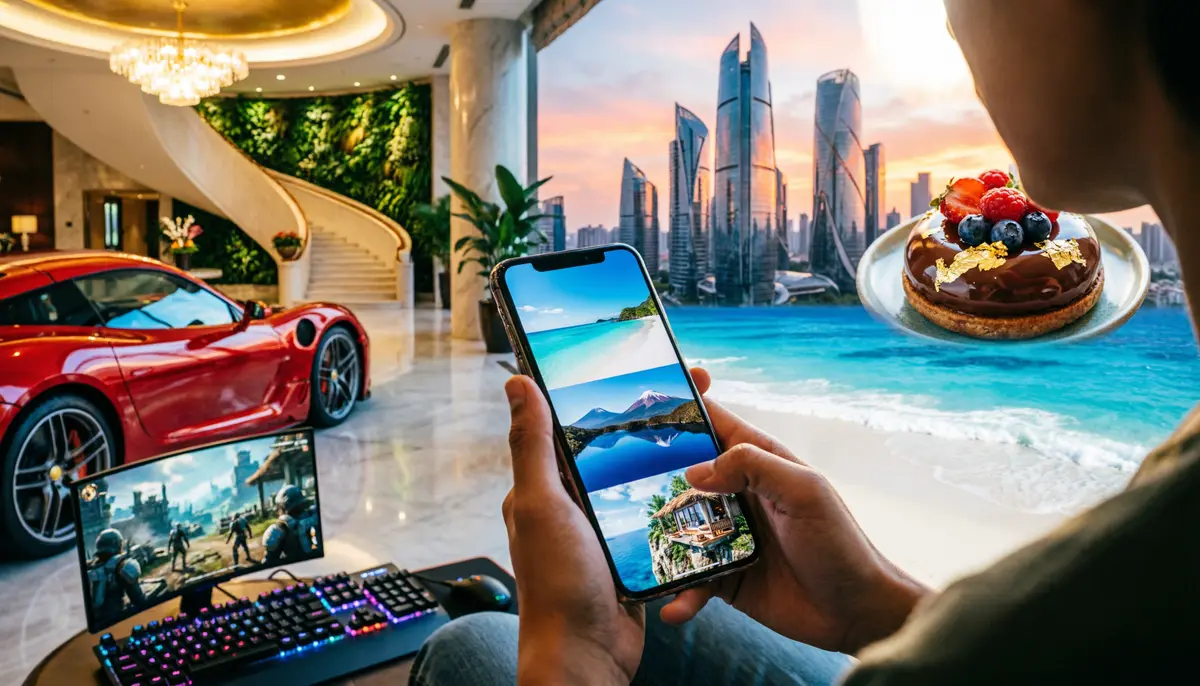
Have you ever opened Instagram to check one notification and ended up spending ten minutes admiring stunning travel photos, luxury homes, colorful desserts, or sleek sports cars? Sometimes you don’t even read the captions. The visuals alone are enough to keep you scrolling.
That reaction perfectly captures the idea behind the phrase eye candy.
Although many people assume it only describes attractive men or women, native English speakers use it much more broadly. A breathtaking mountain view can be eye candy. So can a beautifully designed website, a cinematic video game, a luxury watch, a modern apartment, or a perfectly plated meal.
The expression has been part of everyday English for decades and appears in movie reviews, gaming discussions, fashion blogs, travel articles, design communities, and casual conversations. Depending on the context, it can be genuine praise, playful humor, or even mild criticism when something looks amazing but offers little beyond its appearance.
Understanding that difference is what helps you sound like a natural English speaker rather than someone who memorized a dictionary definition.
In this guide, you’ll learn what eye candy means, where it came from, how native speakers actually use it, when it can sound complimentary or critical, and the most natural ways to include it in your own conversations.
What Does Eye Candy Mean?
Eye candy is an informal English idiom that describes someone or something that is exceptionally attractive to look at. The focus is entirely on visual appeal. If something immediately catches your attention because it looks beautiful, stylish, colorful, or impressive, there’s a good chance someone might call it eye candy.
Unlike many expressions related to beauty, eye candy isn’t limited to people. Native speakers use it for almost anything that creates a strong visual impression.
Imagine walking into a luxury hotel with elegant lighting, marble floors, and stunning architecture. Even before checking into your room, you might think the entire place is eye candy. The same idea applies when watching a movie filled with spectacular visual effects or exploring a website with polished animations and clean design.
Here are a few natural examples.
- That beach is pure eye candy.
- The new sports car is eye candy for automotive enthusiasts.
- Her travel photos are eye candy for anyone who loves nature.
- The game’s graphics are incredible eye candy.
In every example, the emphasis is on appearance rather than function.
Why Do People Say Eye Candy?
The phrase becomes easy to understand once you recognize the metaphor behind it.
Candy isn’t something people need to survive. They enjoy it because it tastes pleasant and provides instant satisfaction. Eye candy works in much the same way, except the pleasure comes through sight instead of taste.
Rather than feeding your stomach, eye candy feeds your eyes.
English contains many expressions built around this idea of giving pleasure to different senses. That’s why you’ll also hear phrases like ear candy for enjoyable music or brain candy for entertaining content that doesn’t require much thought.
Eye candy follows the same pattern. It describes something that delivers immediate visual enjoyment without necessarily saying anything about its deeper quality.
For example, someone might say:
The movie is eye candy, but the story is forgettable.
Here, the speaker is praising the visuals while criticizing the plot.
Eye Candy Pronunciation
The phrase is pronounced:
IPA: /ˈaɪ ˌkæn.di/
A simple pronunciation guide is:
eye KAN dee
The stress naturally falls on the first syllable of candy. Since both words are common English vocabulary, most learners find the pronunciation straightforward after hearing it once or twice.
Part of Speech
Eye candy functions as an idiomatic noun phrase.
Although the individual words are easy to understand, combining them creates a completely different meaning.
Taken literally, eye candy might sound like candy made for your eyes. Of course, that’s not what native speakers mean.
Instead, the phrase has developed a figurative meaning that refers to visual attractiveness.
You’ll usually see it used after linking verbs.
- This artwork is eye candy.
- The resort was absolute eye candy.
- Those mountain views are pure eye candy.
It can also appear inside longer noun phrases.
- The movie delivers plenty of visual eye candy.
- The exhibition offered eye candy for photography lovers.
Where Did the Expression Come From?
No one knows exactly who first coined the phrase, but most language experts agree that eye candy became popular in American English during the second half of the twentieth century.
As television, glossy magazines, Hollywood films, and advertising became increasingly visual, writers needed a quick way to describe things that looked spectacular. Eye candy filled that role perfectly.
By the 1970s and 1980s, entertainment journalists were using the phrase regularly when reviewing blockbuster films, luxury products, fashion trends, and celebrity appearances.
Over time, the expression spread well beyond the United States. Today it’s recognized across the English-speaking world and appears in newspapers, YouTube videos, gaming communities, travel blogs, design magazines, and social media posts.
Its meaning has also expanded. What once referred mainly to attractive people now applies to almost anything that delivers visual pleasure.
It’s Not Just About Attractive People
One of the biggest misconceptions among English learners is believing that eye candy always refers to someone’s physical appearance.
That’s only one possible use.
In reality, native speakers apply the phrase to almost anything that looks visually impressive.
A photographer might call autumn forests eye candy because of their vibrant colors.
A gamer could describe realistic graphics as eye candy because they make the virtual world feel more immersive.
An architect may admire a modern skyscraper as eye candy thanks to its elegant design.
Even food bloggers frequently use the phrase when sharing beautifully decorated cakes, colorful smoothie bowls, or perfectly arranged charcuterie boards.
The common thread isn’t romance.
It’s visual enjoyment.
Why Beautiful Things Capture Our Attention
There’s actually a scientific reason why eye candy has such universal appeal.
Human brains evolved to notice patterns, symmetry, color, movement, and contrast long before modern technology existed. These visual cues helped our ancestors identify food, recognize faces, and stay alert to potential danger.
Although life has changed dramatically, those instincts remain.
That’s why a vibrant sunset instantly grabs your attention. It’s why luxury brands invest heavily in photography and why filmmakers spend millions creating visually stunning scenes.
Your brain naturally rewards attractive visuals by encouraging you to look a little longer.
Marketers understand this extremely well.
Whether they’re designing smartphone advertisements, restaurant menus, clothing catalogs, or travel brochures, the goal is often the same. Capture attention first through appearance, then convince people to keep exploring.
That’s one reason eye candy remains such a relevant expression in today’s digital world.
Is Eye Candy Always a Compliment?
Most of the time, yes.
Calling something eye candy usually means it’s visually impressive or enjoyable to look at.
If someone says,
That beach resort is pure eye candy.
they’re clearly expressing admiration.
Likewise, describing a luxury sports car, elegant wedding decorations, or breathtaking mountain scenery as eye candy is almost always positive.
However, context can completely change the meaning.
Consider this sentence.
The movie is nothing but eye candy.
That sounds much less complimentary.
The speaker isn’t criticizing the visuals. They’re criticizing everything else. The film may look spectacular, but the story, characters, or emotional impact probably fall short.
The same subtle shift can happen when describing people.
Saying someone is eye candy sometimes implies that others value their appearance more than their intelligence, personality, or abilities.
Because of that possibility, it’s worth choosing the phrase carefully, especially in professional environments.
How Eye Candy Is Used Today
Modern English has expanded the phrase far beyond Hollywood celebrities.
Travel writers use it for breathtaking destinations.
Interior designers use it for beautifully decorated homes.
Gamers use it to describe realistic lighting, reflections, textures, and cinematic graphics.
Technology reviewers talk about eye candy when discussing polished user interfaces and elegant product designs.
Even gardeners sometimes describe colorful flower displays as eye candy during spring.
Social media has made the expression even more common.
Browse Instagram, Pinterest, or TikTok, and you’ll regularly find captions celebrating stunning landscapes, luxury hotels, stylish fashion collections, and artistic food photography as eye candy.
The phrase has become shorthand for one simple idea.
Some things deserve to be admired before a single word is spoken.
Eye Candy in Movies, Gaming, and Entertainment
If you’ve ever read a movie review, there’s a good chance you’ve come across the phrase eye candy. Film critics often use it when discussing productions that look incredible on screen but don’t necessarily have a memorable story.
Imagine a science fiction movie packed with breathtaking space scenes, realistic visual effects, and stunning cinematography. Even if the acting or script isn’t particularly strong, reviewers may still praise it as eye candy because the visuals are worth experiencing.
For example:
- The action scenes are pure eye candy.
- Every frame looks like a work of art.
- The special effects are stunning, even if the plot feels predictable.
The phrase isn’t always negative in film criticism. Many blockbuster movies successfully combine spectacular visuals with engaging storytelling. In those cases, eye candy simply highlights one of the movie’s greatest strengths.
The same idea applies to animated films. Rich colors, detailed backgrounds, and imaginative character designs often make an animated movie enjoyable before a single line of dialogue is spoken.
Why Gamers Love the Phrase
Gaming communities probably use eye candy more than almost any other group.
When players talk about eye candy, they’re usually referring to graphics rather than gameplay. High-resolution textures, realistic lighting, weather effects, reflections, and beautifully designed environments all fall into this category.
You might hear comments like:
- The new update adds plenty of visual eye candy.
- Those ray-traced reflections are incredible.
- I could spend hours exploring the world because it’s pure eye candy.
Interestingly, gamers often separate graphics from gameplay.
A game can be visually stunning while still having repetitive missions or weak mechanics. Likewise, an older game with simple graphics may still be considered a masterpiece because of its storytelling and gameplay.
That’s why reviews often balance both aspects instead of focusing only on appearance.
Eye Candy in Web Design and Technology
The digital world has given the phrase another layer of meaning.
Web designers frequently use eye candy when talking about decorative visual elements that make websites or apps feel modern and engaging.
Smooth animations, elegant typography, colorful illustrations, subtle transitions, and polished icons all contribute to visual appeal.
For example:
- The homepage includes tasteful eye candy without feeling cluttered.
- The animations add personality to the interface.
- The dashboard looks clean and modern.
However, experienced designers also recognize an important rule.
Good design should improve usability, not distract from it.
A website overloaded with flashing effects, moving backgrounds, and unnecessary animations may look exciting for a few seconds, but visitors can quickly become frustrated if it’s difficult to navigate.
That’s why designers often say that good eye candy supports the user experience instead of competing with it.
Marketing Relies on Eye Candy Every Day
Whether you realize it or not, you’re surrounded by eye candy almost everywhere you go.
Restaurants carefully arrange meals before photographing them for advertisements.
Car manufacturers showcase new models under dramatic lighting.
Travel companies fill brochures with crystal-clear beaches and mountain landscapes.
Fashion brands invest heavily in professional photography because first impressions matter.
People naturally respond to attractive visuals long before reading detailed information about a product.
That’s why businesses spend millions creating advertisements that immediately capture attention.
Of course, appearance alone rarely guarantees success. A beautiful advertisement might encourage someone to click, but product quality determines whether they’ll return.
Natural Ways Native Speakers Use Eye Candy
Learning vocabulary is one thing. Using it naturally is something else.
Fortunately, eye candy follows several common patterns that you’ll hear repeatedly in everyday English.
One of the simplest is:
Be + eye candy
Examples include:
- The resort is eye candy.
- That museum is eye candy for art lovers.
- The city skyline is eye candy at night.
Another popular variation adds an adjective before the phrase.
- pure eye candy
- absolute eye candy
- visual eye candy
For example:
- The animation is pure eye candy.
- Those sports cars are absolute eye candy.
- The trailer delivers visual eye candy from start to finish.
Native speakers also like specifying the audience.
- eye candy for photographers
- eye candy for travelers
- eye candy for gamers
- eye candy for architecture lovers
- eye candy for food enthusiasts
These combinations sound far more natural than repeatedly saying something is simply beautiful.
British and American Usage
Although eye candy originated in American English, it has become familiar throughout the English-speaking world.
You’ll hear it in Canada, Australia, New Zealand, and the United Kingdom, particularly in entertainment, technology, travel, and online discussions.
Americans tend to use the phrase a little more often, especially in movie reviews, gaming articles, and advertising.
British speakers understand it perfectly, but they sometimes prefer alternatives like:
- visually stunning
- gorgeous
- beautiful to look at
- a feast for the eyes
The meaning stays the same regardless of where it’s is used.
Eye Candy vs. Beauty
At first glance, these expressions seem interchangeable, but they emphasize different ideas.
Beauty is a broad concept. Something beautiful may impress people because of its history, craftsmanship, emotional depth, or artistic meaning.
Eye candy focuses on immediate visual attraction.
Consider a centuries-old painting displayed in a museum.
Someone may describe it as beautiful because of its cultural significance and artistic value.
A colorful digital wallpaper, on the other hand, might be eye candy because it instantly catches your attention.
One suggests lasting appreciation.
The other highlights instant visual pleasure.
Neither is better than the other. They simply emphasize different qualities.
Eye Candy vs. Substance
One comparison appears repeatedly in reviews.
Imagine two smartphones.
The first has a gorgeous design, premium materials, and an eye-catching display, but its battery performs poorly.
The second looks fairly ordinary but delivers outstanding performance.
Reviewers may describe the first phone as eye candy with little substance.
They’re not criticizing its appearance.
Instead, they’re pointing out that attractive design alone isn’t enough.
The same applies to movies, websites, architecture, and consumer products.
Something can certainly be beautiful while still lacking practical value.
On the other hand, many products successfully combine both appearance and performance.
A luxury watch may be eye candy while also offering exceptional craftsmanship.
An award-winning video game can feature breathtaking graphics alongside unforgettable gameplay.
Context always determines whether eye candy sounds like praise or criticism.
Eye Candy vs. Arm Candy
These expressions are often confused because they sound similar.
Eye candy refers to anything visually attractive.
That includes people, landscapes, artwork, buildings, cars, fashion, technology, and food.
Arm candy has a much narrower meaning.
It almost always describes an attractive person accompanying someone to a social event, often to enhance their public image.
For example:
- The luxury resort is eye candy.
- The celebrity arrived with arm candy.
The first focuses on visual beauty.
The second focuses on an attractive companion.
Although both expressions involve appearance, they aren’t interchangeable.
Eye Candy vs. Eye Catching
Another common source of confusion is eye catching.
Something eye catching grabs your attention.
Something described as eye candy gives you pleasure simply by looking at it.
A bright yellow road sign is eye catching because it’s designed to stand out.
A tropical island is eye candy because it’s beautiful.
Some things can be both, but the meanings aren’t identical.
A Feast for the Eyes
Another expression with a similar meaning is a feast for the eyes.
Both phrases praise visual beauty, but they create slightly different impressions.
Eye candy sounds casual and conversational.
A feast for the eyes feels richer and more descriptive.
For example:
- That Ferrari is eye candy.
- The palace gardens are a feast for the eyes.
You’ll often hear the second expression in travel writing, literature, or descriptive journalism, while eye candy appears more frequently in everyday conversation.
Can Eye Candy Also Have Real Value?
Absolutely.
One misconception is that eye candy automatically means something is shallow.
That’s simply not true.
Some of the world’s most admired products combine remarkable appearance with exceptional quality.
Think about an award-winning piece of architecture that functions brilliantly while looking spectacular.
Or consider a beautifully designed smartphone that performs flawlessly.
The same is true of luxury hotels, modern museums, elegant furniture, and critically acclaimed video games.
Calling these things eye candy simply recognizes their visual appeal. It doesn’t suggest they’re lacking in substance.
Sometimes beauty and quality exist together, and eye candy can describe only one part of that experience.
Be Careful When Using Eye Candy for People
Most of the time, calling a landscape, painting, sports car, or beautifully designed building eye candy is completely harmless. Problems can arise when the phrase is used to describe a person.
Some people take it as a compliment because it recognizes physical attractiveness. Others feel it reduces someone to their appearance while ignoring their personality, intelligence, or achievements.
Consider these two examples.
- She’s eye candy in the new movie.
- She’s one of the most talented actresses of her generation.
The first focuses almost entirely on appearance. The second recognizes ability and accomplishments.
Now imagine someone saying:
- The company hired him as eye candy.
Many people would find that comment disrespectful because it suggests the person’s looks matter more than their skills.
Among close friends, the phrase may be used jokingly and without causing offense. In workplaces, formal , or conversations with people you don’t know well, it’s usually better to choose compliments that acknowledge more than appearance.
For example, you could say:
- She has an amazing sense of style.
- He always looks well dressed.
- She’s incredibly photogenic.
- He has a great screen presence.
These alternatives sound more respectful while still complimenting someone’s appearance.
Common Mistakes English Learners Make
Even advanced English learners sometimes misuse this expression. Understanding the most common mistakes will help you sound more natural.
Thinking It Only Refers to Attractive People
This is easily the biggest misconception.
Native speakers use eye candy for far more than people. It can describe landscapes, architecture, fashion, artwork, food, technology, luxury cars, websites, video games, and even interior design.
If something is visually appealing, it can probably be called eye candy.
Assuming It’s Always Positive
The phrase often sounds complimentary, but context changes everything.
Compare these two sentences:
- The resort is pure eye candy.
This clearly praises the resort.
Now compare it with:
- The movie is nothing but eye candy.
Here, the speaker is criticizing the movie for relying on visuals instead of strong storytelling.
Always pay attention to the surrounding words before deciding whether the phrase is positive or negative.
Using It in Formal Writing
Eye candy is an informal idiom.
It’s perfectly acceptable in conversations, blogs, magazine articles, entertainment journalism, travel writing, and social media.
However, it doesn’t belong in academic papers, legal documents, business reports, or professional research.
Instead of writing:
- The presentation contained eye candy.
You could write:
- The presentation included visually appealing graphics.
That sounds much more appropriate in a professional setting.
Overusing the Phrase
Because eye candy is memorable, learners sometimes use it too often.
Native speakers usually mix it with other descriptive expressions such as:
- visually stunning
- breathtaking
- striking
- elegant
- gorgeous
- captivating
- aesthetically pleasing
- spectacular
- picture perfect
Using a variety of vocabulary makes your English sound much more natural.
Similar Expressions Worth Knowing
English has plenty of idioms related to sight, but each one carries a different meaning.
Easy on the Eyes
This expression means someone or something is pleasant to look at without sounding as dramatic as eye candy.
Example:
- The new café is easy on the eyes.
A Feast for the Eyes
This phrase describes something exceptionally beautiful and often appears in travel writing or literature.
Example:
- The botanical gardens were a feast for the eyes during spring.
Eye Opening
Despite sharing the word eye, this expression has nothing to do with appearance.
It means surprising, educational, or thought provoking.
Example:
- The documentary was eye opening.
Apple of My Eye
This classic idiom refers to someone who is deeply loved or cherished.
Example:
- My grandson is the apple of my eye.
Learning these expressions together makes it easier to understand how flexible English idioms can be.
Better Alternatives to Eye Candy
Sometimes another expression fits the situation better.
Instead of repeating eye candy every time you describe something attractive, consider using:
- visually stunning
- breathtaking
- gorgeous
- elegant
- visually striking
- captivating
- dazzling
- picture perfect
- aesthetically pleasing
- magnificent
- scenic
- beautiful
- impressive
- spectacular
These alternatives are especially useful in formal writing, professional presentations, or descriptive articles where a wider vocabulary creates a stronger impression.
Final Thoughts
Eye candy is one of those expressions that perfectly captures how English turns everyday words into memorable idioms. In just two simple words, it describes the immediate pleasure we get from looking at something beautiful.
Whether you’re admiring a luxury sports car, a breathtaking mountain range, a beautifully designed website, an elegant hotel, or a blockbuster movie filled with spectacular visual effects, the phrase emphasizes visual appeal above everything else.
At the same time, context matters. Used for places, artwork, technology, fashion, or food, eye candy is almost always complimentary. When applied to people, however, it can sometimes sound playful, flattering, or even objectifying depending on the situation and the speaker’s intent.
As social media, gaming, streaming platforms, and digital design continue to shape modern culture, eye candy remains as relevant as ever. It’s a phrase you’ll regularly encounter in movie reviews, travel blogs, photography communities, design discussions, automotive magazines, and everyday conversations.
Once you understand its meaning, history, and subtle nuances, you’ll recognize it almost everywhere. More importantly, you’ll know exactly when to use it and when another expression might be the better choice.
Frequently Asked Questions
What does eye candy mean?
Eye candy is an informal English idiom that refers to someone or something that is especially attractive to look at. It can describe people, landscapes, architecture, cars, artwork, websites, food, movies, video games, and many other visually appealing things.
Is eye candy an idiom or slang?
It’s best classified as an informal idiom. The phrase is widely understood by native English speakers and appears in everyday conversation, entertainment journalism, blogs, and online media.
Can eye candy describe objects?
Yes. In fact, native speakers frequently use it for objects and places. A luxury car, beautiful garden, elegant building, travel destination, or visually impressive website can all be described as eye candy.
Is eye candy always about physical beauty?
No. The phrase refers to visual appeal rather than romantic attraction. It can describe colorful artwork, cinematic landscapes, stylish interiors, or anything that is pleasing to the eye.
Is it rude to call someone eye candy?
It depends on the context. Friends may use the phrase jokingly, but in professional or formal situations it can sound objectifying because it focuses on appearance rather than personality or ability. If you’re unsure, choose a more respectful compliment.
Does eye candy always mean something lacks substance?
No. While reviewers sometimes use the phrase to criticize something that looks great but lacks depth, eye candy can also describe products, films, architecture, or games that combine stunning visuals with outstanding quality.
What is the opposite of eye candy?
There isn’t one exact opposite, but common alternatives include visually unappealing, plain, ordinary, dull, uninspiring, and unattractive.
What are some common phrases with eye candy?
Native speakers often use expressions like:
- pure eye candy
- visual eye candy
- absolute eye candy
- nothing but eye candy
- eye candy for photographers
- eye candy for gamers
- eye candy for travelers
- eye candy overload
These collocations appear frequently in reviews, blogs, and casual conversation.
Can I use eye candy in formal writing?
Generally, no. Because it’s an informal idiom, it’s better suited to conversations, blogs, lifestyle articles, reviews, and social media. In formal writing, alternatives such as visually appealing, aesthetically pleasing, or visually striking are more appropriate.
