Quick Answer
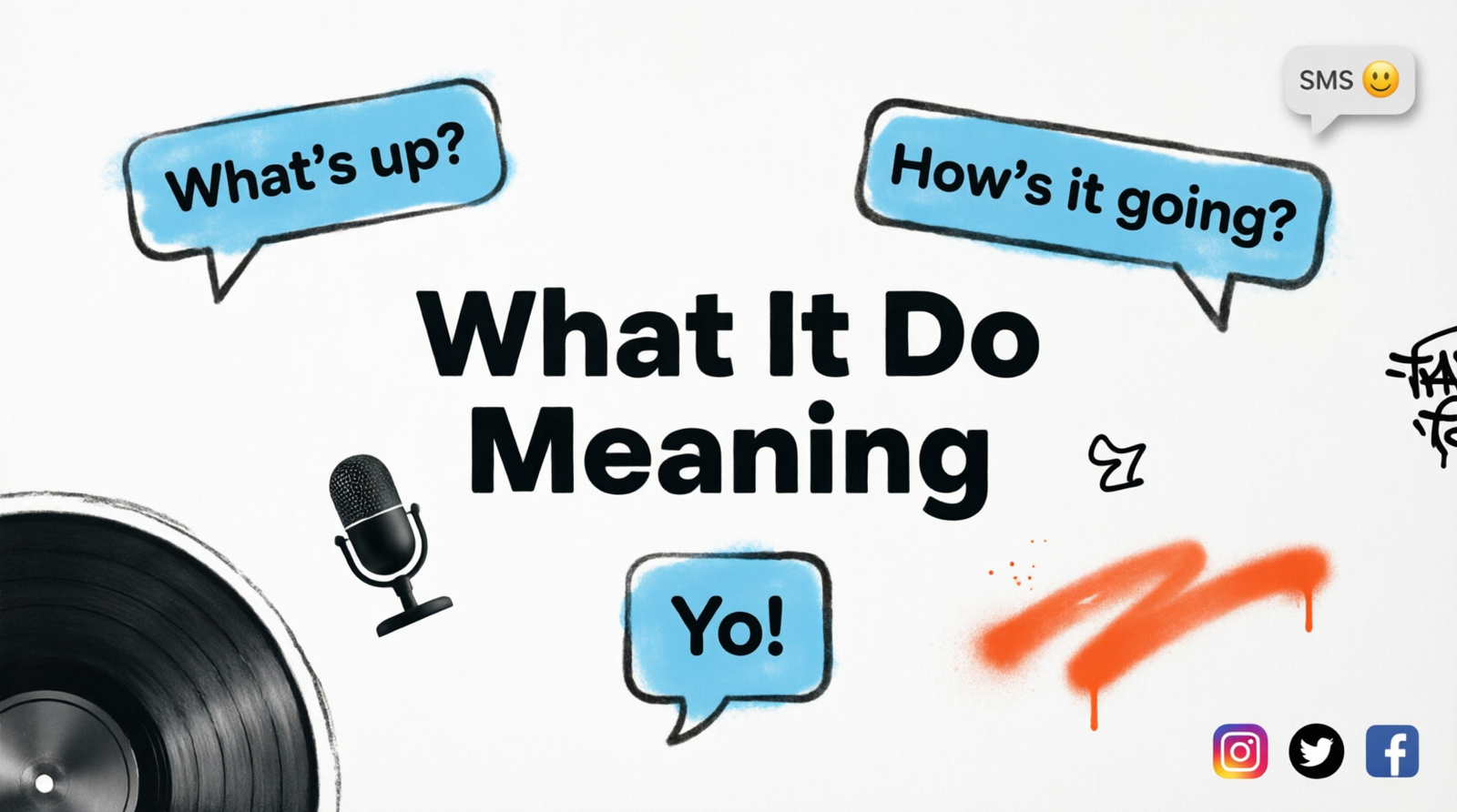
What it do is an informal slang greeting that means “What’s up?”, “How’s it going?”, “What’s going on?”, or “How have you been?” It originated in African American Vernacular English (AAVE) and became widely recognized through hip-hop culture, social media, memes, and everyday conversations. Today, people use it as a friendly way to greet friends, start a conversation, or check in with someone in a relaxed setting.
If someone says “What it do?”, they’re usually inviting casual conversation rather than asking a literal question. Common replies include “Not much,” “I’m good,” “Just chilling,” or even “What it do!” in return.
More Than Just Another Greeting
English has no shortage of casual greetings. People say What’s up?, How’s it going?, Yo, Sup?, and dozens of other expressions without expecting a detailed answer. What it do belongs to that same family, but it carries its own cultural history and personality.
You might hear it in a rap song, during an NBA interview, in a TikTok video, or in a text from a friend. Although the phrase may sound unusual if you read it word for word, native speakers rarely think about its grammar. They recognize it immediately as an informal greeting.
One reason people search for this phrase is because it doesn’t follow standard English patterns. Someone unfamiliar with American slang may wonder whether it is asking about an action, a person, or an event. In reality, the phrase functions as an idiom. Its meaning comes from everyday use rather than from translating each individual word.
Understanding where the expression came from and how people use it today makes it much easier to recognize in conversations both online and offline.
What Does “What It Do” Mean?
At its core, what it do is simply a relaxed greeting.
Depending on the situation, it can mean:
- What’s up?
- How are you?
- What’s going on?
- How have you been?
- What’s happening?
- What’s new?
Unlike formal greetings, it isn’t meant to begin a serious conversation. Instead, it signals friendliness and familiarity.
For example:
Friend: What it do?
Reply: Not much. Just got off work.
Or:
Friend: What it do, bro?
Reply: Just chilling. You?
In both examples, nobody expects a long explanation. The greeting simply opens the conversation.
Pronunciation
Most speakers pronounce the phrase naturally as:
wut-it-DOO
The words often blend together in casual speech, making it sound like one smooth expression rather than three separate words.
Because it’s spoken quickly, new English learners sometimes hear it as “whaddado” or “whatta do.” That’s perfectly normal. The pronunciation varies slightly depending on the speaker’s accent and region.
Why Doesn’t the Grammar Look Correct?
One question appears repeatedly online:
“Shouldn’t it be ‘What does it do?’ instead of ‘What it do?'”
From a standard grammar perspective, yes. But slang doesn’t always follow formal grammatical rules.
What it do is an established idiomatic expression that developed naturally in spoken language. Like many greetings, its meaning cannot be understood by translating each word literally.
Consider these examples:
- What’s up?
- Sup?
- Yo.
- Howdy.
None of these are complete formal sentences either, yet millions of people use them every day.
The same idea applies to what it do. It functions as a greeting, not as a grammar exercise.
Where Did “What It Do” Come From?
The phrase originated in African American Vernacular English (AAVE), a well-established variety of English spoken by many African American communities across the United States.
For decades, expressions from AAVE have influenced American music, entertainment, sports, and eventually mainstream popular culture. Many phrases that are common today first gained popularity within Black communities before spreading more widely through hip-hop, television, movies, and the internet.
What it do followed a similar path.
Although the exact person who first used the expression is unknown, it became increasingly common during the 1990s and early 2000s as Southern hip-hop expanded its influence across the country.
Artists, DJs, athletes, comedians, and radio personalities frequently opened conversations with:
- What it do?
- What it do, baby?
- What it do, fam?
- What it do, homie?
As these greetings appeared in music, interviews, and online videos, people outside the communities where the phrase originated began adopting it as well.
Today, many people use it without even realizing its linguistic background.
How Hip-Hop Helped Popularize the Phrase
Slang often spreads through music faster than through dictionaries.
During the rise of Southern rap and hip-hop in the late 1990s and early 2000s, audiences regularly heard artists greeting fans with expressions that felt authentic and conversational.
Rather than saying, “Hello, everyone,” performers would begin with something like:
“What it do?”
The phrase sounded energetic, welcoming, and personal.
As mixtapes, music videos, and concerts reached larger audiences, the greeting became familiar to listeners across the United States. Eventually, social media accelerated that spread even further.
Today, someone who has never visited the American South may still recognize the expression because they heard it in a song, podcast, YouTube video, or livestream.
From Local Slang to Internet Culture
Like many slang expressions, what it do experienced a second wave of popularity after moving online.
Platforms such as Twitter (now X), Instagram, TikTok, YouTube, Twitch, and Snapchat made casual greetings part of digital conversations.
Instead of opening a livestream with:
“Hello everyone.”
A creator might simply say:
“What it do, everybody?”
Gamers use it when joining voice chat.
Streamers use it when greeting viewers.
Friends use it when starting text conversations.
Even brands occasionally use it to create a relaxed, youthful tone, although doing so successfully depends on understanding the audience.
Because of this online exposure, the phrase is now recognized far beyond the communities where it first became popular.
What Does “What It Do, Baby?” Mean?
One of the biggest reasons people search for what it do today is the famous phrase “What it do, baby?” While the original greeting had been around for years, this variation exploded in popularity because of a viral sports clip that quickly became an internet meme.
In 2019, NBA star Kawhi Leonard recorded a short Snapchat video with teammate Serge Ibaka after joining the Los Angeles Clippers. In the clip, Leonard smiles at the camera and casually says:
“What it do, baby?”
The internet loved the moment because Leonard is known for having a quiet, reserved personality. Seeing him deliver the greeting with an unexpectedly playful tone made the clip instantly memorable. Within days, the video spread across X (formerly Twitter), Instagram, Reddit, TikTok, YouTube, and countless meme pages.
People soon began using the phrase whenever they wanted to make a humorous entrance, greet friends dramatically, or jokingly message someone they hadn’t spoken to in a while.
Today, “What it do, baby?” is recognized as both a greeting and a meme. Even people who rarely use the original expression often recognize this version.
How People Use “What It Do” Today
Although the phrase started as spoken slang, it now appears almost everywhere people communicate informally.
In Everyday Conversation
Friends often use it instead of saying hello.
Examples:
“What it do, man? Long time no see.”
“What it do, bro? Ready for the game?”
“What it do, fam? Everyone’s waiting for you.”
The greeting creates a relaxed, friendly atmosphere from the beginning of the conversation.
In Text Messages
Because texting encourages short, casual language, what it do fits naturally into messages.
Examples:
- What it do?
- What it do tonight?
- What it do, cousin?
- What it do, everybody?
Most people use it exactly as they would use “What’s up?”
On Social Media
The phrase frequently appears in captions, comments, livestreams, and direct messages.
Examples include:
- What it do, TikTok?
- What it do, Instagram?
- What it do, gang?
- What it do, everyone?
Creators often use it as an energetic way to greet their audience before beginning a video.
In Gaming Communities
Online gaming communities frequently adopt informal greetings.
A player joining voice chat might say:
“What it do, squad?”
A streamer may begin a live broadcast with:
“What it do, chat?”
Here, the phrase serves exactly the same purpose as “Hey everyone.”
How to Reply to “What It Do”
Unlike formal questions, what it do doesn’t require a detailed answer.
Some of the most natural replies include:
- Not much.
- Just chilling.
- I’m good.
- Same old.
- Can’t complain.
- What’s up with you?
- Living the dream.
- Everything’s good.
- Just got home.
- What it do!
Many people simply return the greeting.
For example:
Alex: What it do?
Jordan: What it do! How you been?
Or:
Chris: What it do, bro?
Marcus: Just chilling. You?
The goal is to keep the conversation casual rather than treating it like a formal check-in.
Common Variations
Like many slang expressions, what it do has evolved into several variations. They all share the same basic meaning but create slightly different tones.
| Expression | Meaning | Example |
|---|---|---|
| What it do? | What’s up? | What it do, man? |
| What it do, baby? | Friendly greeting; popular meme | What it do, baby? |
| What it do, bro? | Greeting a friend | What it do, bro? |
| What it do, fam? | Greeting family or close friends | What it do, fam? |
| What it do, homie? | Friendly neighborhood greeting | What it do, homie? |
| What it do, everybody? | Greeting a group | What it do, everybody? |
Each version keeps the same welcoming tone while adapting to different audiences.
Conversation Examples
Seeing the phrase in realistic conversations makes it easier to understand.
Example 1: Meeting a Friend
Mike: What it do?
James: Not much. Just grabbing lunch.
Example 2: Text Message
Emma: What it do tonight?
Sophia: Thinking about seeing a movie.
Example 3: Gaming
Player 1: What it do, squad?
Player 2: Ready whenever you are.
Example 4: Family Gathering
Cousin: What it do, fam?
You: Good to see everyone again.
Example 5: Social Media
Creator: What it do, everybody? Welcome back to another video.
These examples show that the phrase works naturally whenever the setting is informal and friendly.
Similar Greetings
Although what it do has its own personality, several other greetings communicate nearly the same idea.
| Expression | Meaning | Formality |
|---|---|---|
| What’s up? | General greeting | Informal |
| What’s good? | What’s happening? | Informal |
| Sup? | Shortened form of What’s up? | Very informal |
| Yo | Attention-getting greeting | Informal |
| How’s it going? | Asking how someone is | Casual |
| What’s happening? | What’s new? | Informal |
| Hey | Standard greeting | Neutral |
Choosing between these depends on your relationship with the other person and the situation.
When Should You Use It?
The phrase works best in relaxed environments.
Good situations include:
- Talking with friends
- Greeting classmates
- Messaging family
- Online gaming
- Social media posts
- Casual parties
- Livestreams
- Friendly workplace conversations
Avoid using it in situations like:
- Job interviews
- Business emails
- Academic papers
- Professional presentations
- Speaking with clients for the first time
- Formal ceremonies
In professional , greetings like Hello, Good morning, or How are you? are more appropriate.
Common Mistakes
Many people misunderstand the phrase because they focus on its grammar instead of its function.
Thinking It’s a Literal Question
The phrase is usually just another way of saying hello. It rarely asks for detailed information.
Using It in Formal
Because it’s slang, it isn’t suitable for every audience.
Assuming Everyone Uses It
Although widely recognized, what it do remains much more common in casual American English than in formal or international communication.
Ignoring Its Cultural Background
The expression comes from African American Vernacular English and became popular through Black culture and hip-hop. Understanding that history helps people appreciate the phrase rather than treating it as random internet slang.
Frequently Asked Questions
What does “what it do” mean in slang?
It is a casual greeting meaning “What’s up?”, “How are you?”, or “What’s going on?”
Is “what it do” proper English?
No. It is an idiomatic slang expression rather than standard formal English.
Where did “what it do” come from?
The phrase developed in African American Vernacular English (AAVE) and became widely known through hip-hop, sports, and internet culture.
What does “what it do, baby?” mean?
It is a playful version of the greeting that became famous after NBA player Kawhi Leonard used it in a viral video.
Is “what it do” rude?
No. It is generally considered friendly and informal, although it may sound too casual in professional situations.
How should I reply to “what it do”?
Simple responses such as “Not much,” “I’m good,” “Just chilling,” or “What it do!” are all natural.
Do people still say “what it do”?
Yes. While it isn’t as common as “What’s up?”, it remains popular in casual conversations, music, gaming communities, and social media.
Can anyone use the phrase?
Yes, but understanding its cultural background and using it respectfully in appropriate situations is important.
Conclusion
What it do is much more than an unusual-looking phrase. It’s a long-standing informal greeting rooted in African American Vernacular English (AAVE) that has grown into a familiar part of American popular culture. Over the years, hip-hop, sports, social media, and internet memes have helped introduce it to millions of people around the world.
Today, the expression simply means “What’s up?” or “How’s it going?” It creates a friendly, relaxed tone and works best among friends, family members, teammates, classmates, and online communities. The viral “What it do, baby?” meme gave the greeting a new generation of fans, but its history stretches back long before internet fame.
Whether you hear it in a song, see it in a text message, or encounter it on TikTok, understanding its meaning and cultural background makes it much easier to recognize when—and how—to use it naturally.
