Quick Answer
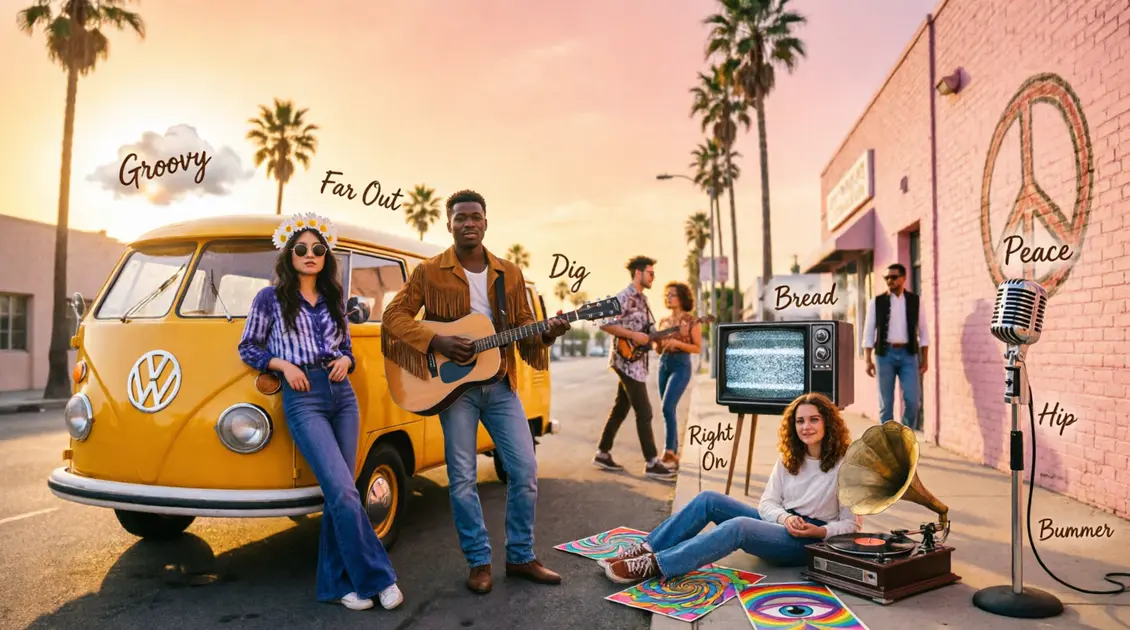
Words from the sixties are the slang terms, catchphrases, and everyday expressions that became popular during the 1960s. They reflected one of the most influential decades in modern history, shaped by rock music, the civil Rights Movement, the space race, television, youth culture, and the counterculture movement. Some expressions faded with time, while others, including cool, bread, cherry-pick, hacker, heavy, and power trip, became permanent parts of everyday English.
The Decade That Changed Everyday English
Few decades have influenced the English language as deeply as the 1960s.
It was a period of rapid social change. Music was evolving almost every year. Television connected millions of households. Young people were questioning traditions, embracing new lifestyles, and creating trends that spread across the country faster than ever before.
Language changed alongside everything else.
Instead of speaking in a formal or predictable way, people began using colorful expressions that reflected excitement, individuality, and optimism. A single word could communicate an entire mood. Calling something groovy meant it was stylish and enjoyable. Saying something was far out suggested it was extraordinary. Responding with right on showed agreement with energy rather than simple approval.
Many of these expressions began in local communities before reaching a national audience. Musicians, college students, activists, comedians, and television personalities all helped introduce new vocabulary that quickly became part of daily conversation.
Even decades later, these words remain recognizable because they capture the personality of one of the most transformative eras in American history.
What Are Words From the Sixties?
When people search for words from the sixties, they are usually looking for the expressions that became closely associated with life during the 1960s.
These words include several different categories.
- Everyday slang
- Hippie expressions
- Music-inspired vocabulary
- Protest slogans
- Television catchphrases
- Fashion terminology
- Youth culture phrases
- Social movement language
Not every expression was invented during the decade.
Some had existed for years before becoming widely popular. Cool, for example, was already common among jazz musicians long before the 1960s. Likewise, groovy had earlier roots but became one of the defining words of the hippie movement after reaching mainstream audiences.
Understanding these expressions means understanding the cultural changes that helped them spread.
Why the 1960s Produced So Much New Slang
Language often changes during periods of major social transformation, and the 1960s experienced several cultural revolutions at the same time.
Each movement introduced new ideas, and each idea inspired new ways of speaking.
Young People Became Cultural Leaders
Earlier generations generally adopted the language of adults.
The 1960s reversed that pattern.
Teenagers and college students became trendsetters. They influenced music, fashion, entertainment, and everyday conversation. Speaking differently became a way to express independence.
Using words such as dig, groovy, or far out signaled that someone belonged to a younger generation that valued creativity over tradition.
Slang became part of personal identity rather than simple informal speech.
Music Changed the Way People Talked
Rock music did more than entertain audiences.
It introduced new vocabulary.
Bands and singers used informal language in songs, interviews, and live performances. Fans repeated those expressions until they became part of ordinary conversation.
The British Invasion, Motown, folk music, psychedelic rock, surf rock, and soul music all contributed to the spread of new slang.
Words like psychedelic, heavy, and peace became familiar because listeners heard them repeatedly through music.
Concerts also acted as meeting places where people shared language just as easily as they shared musical tastes.
Television Created a Shared Vocabulary
By the middle of the decade, television had become one of the most powerful forms of entertainment.
Comedy shows, variety programs, talk shows, and news broadcasts reached millions of viewers every week.
Expressions that once belonged to one region suddenly became national phrases.
Television personalities developed memorable catchphrases that audiences repeated at school, at work, and at home.
Advertisers also began using youthful language to connect with younger consumers, helping many expressions become even more widespread.
Social Movements Inspired New Expressions
The Civil Rights Movement, anti-war demonstrations, student activism, and calls for greater equality shaped everyday conversations throughout the decade.
Words connected with freedom, justice, unity, and peace became common outside political speeches.
Many people viewed language as a reflection of their beliefs.
Choosing certain expressions became a way of expressing support for social change and new cultural values.
Creativity Became a Lifestyle
The counterculture encouraged people to think differently.
Art, music, fashion, and personal expression all became more experimental.
That creativity naturally influenced language.
Instead of relying on ordinary descriptions, people invented colorful phrases that sounded imaginative and optimistic.
Many of those expressions still evoke the unique atmosphere of the 1960s today.
The Ultimate Dictionary of Popular Sixties Words
Here are some of the best-known words that became closely associated with the decade.
| Word | Meaning | Still Used Today? |
|---|---|---|
| Groovy | Excellent or stylish | Occasionally |
| Far Out | Amazing or unbelievable | Rarely |
| Dig | Understand or appreciate | Sometimes |
| Right On | Strong agreement | Occasionally |
| Bread | Money | Yes |
| Bag | Personal style or preference | Sometimes |
| Flower Child | Peace-loving hippie | Mostly historical |
| Heavy | Serious or emotionally intense | Yes |
| Psychedelic | Colorful or mind-expanding | Yes |
| Peace | Greeting or expression of goodwill | Yes |
| Cool | Stylish or impressive | Very common |
| Hip | Fashionable or informed | Common |
| Fab | Fabulous | Rare |
| Bummer | A disappointing situation | Common |
| Cherry-pick | Select the best option | Very common |
| Hacker | Technology expert or computer intruder | Very common |
| Power Trip | Abuse of authority | Common |
| Handsy | Touching someone inappropriately | Common |
| Munchies | Sudden hunger, especially after cannabis use | Common |
| Golden Oldies | Classic songs or entertainment | Common |
Some of these expressions have become permanent parts of modern English.
Others remain closely linked to the colorful culture of the 1960s and are mostly heard in documentaries, retro films, and conversations about the decade.
Many Communities Helped Shape Sixties Slang
One common misconception is that every famous word from the 1960s came from hippie culture.
The reality is much more interesting.
The decade borrowed vocabulary from many different communities, each contributing its own style of expression.
Important influences included:
- Jazz musicians
- African American communities
- Beat Generation writers
- College students
- Surfers
- Television comedians
- Rock musicians
- Civil Rights activists
- Military personnel
- Urban youth culture
Because these communities interacted through music, travel, television, and education, their expressions blended together.
That mixture created one of the richest collections of slang in modern English.
Many words that sounded fresh and rebellious during the 1960s eventually became ordinary vocabulary used by people who never experienced the decade themselves.
Twenty Iconic Words That Captured the Spirit of the Sixties
The language of the 1960s did not appear overnight. Some expressions had been circulating in jazz clubs and college campuses for years, while others emerged from television, rock music, surfing culture, and social activism. By the end of the decade, these words had become part of everyday conversations across the United States.
Many are still recognized today, even if they are now used with a nostalgic smile.
1. Groovy
If one word instantly brings the 1960s to mind, it is groovy.
People used it to describe anything exciting, fashionable, enjoyable, or impressive. Whether someone discovered a new band, bought colorful clothes, or had an unforgettable weekend, groovy was the perfect compliment.
Examples
That new record is groovy.
We had a groovy time at the festival.
Today, the word is usually used playfully to create a retro feel rather than as everyday slang.
2. Far Out
Far out described something extraordinary.
Instead of saying amazing or unbelievable, people used far out when they encountered something surprising or imaginative.
The expression became especially common in conversations about music, art, science, and new experiences.
Examples
That painting is far out.
The moon landing was far out.
Although rarely heard in daily conversation today, it remains one of the most recognizable phrases from the era.
3. Dig
Dig originally came from jazz culture before spreading into mainstream English.
The word could mean understand, appreciate, admire, or genuinely enjoy something.
Examples
I really dig that song.
Do you dig what I am saying?
Unlike many other expressions from the decade, dig still appears occasionally in modern conversation.
4. Right On
Sometimes agreement deserves more enthusiasm than simply saying yes.
That is exactly what right on communicated.
It expressed support, encouragement, and excitement all at once.
Examples
Person A: Everyone deserves equal opportunities.
Person B: Right on.
The phrase became especially common during concerts, political rallies, and student demonstrations.
5. Bread
Every generation invents new slang for money.
During the 1960s, one of the most popular choices was bread.
Examples
I need more bread before the weekend.
She saved enough bread to buy a new guitar.
Although newer slang has replaced it for many younger speakers, bread remains familiar to most English speakers.
6. Bag
Bag referred to someone’s personal preference, style, or area of interest.
If something was not your bag, it simply was not your thing.
Examples
Jazz is my bag.
Camping is not really my bag.
The phrase still appears occasionally, particularly among older generations.
7. Bummer
Life is full of disappointments, and during the sixties many people simply called them bummers.
The word could describe bad news, cancelled plans, or unfortunate situations.
Examples
Missing the concert was a real bummer.
That is such a bummer.
Unlike many expressions from the era, bummer remains common in everyday English.
8. Flower Child
Few expressions symbolize the peace movement more clearly than flower child.
The phrase referred to young people who embraced nonviolence, artistic expression, environmental awareness, and communal living.
Flowers became symbols of peace during demonstrations, giving rise to the name.
Today, flower child is mainly used when discussing the culture and history of the 1960s.
9. Peace
Peace was much more than an ordinary English word during the sixties.
It became a greeting, a farewell, and a philosophy.
Instead of saying goodbye, many people simply said peace while raising the now famous peace sign.
The word represented hopes for an end to war and a more compassionate society.
Even today, peace remains a casual farewell among many English speakers.
10. Heavy
Heavy had little to do with physical weight.
Instead, it described ideas, conversations, emotions, or experiences that carried serious meaning.
Examples
That documentary was heavy.
We had a heavy discussion last night.
Modern English still uses heavy in much the same way.
11. Psychedelic
Originally connected with altered states of consciousness, psychedelic soon expanded into music, fashion, art, and graphic design.
Swirling colors, unusual patterns, and experimental sounds all came to be described as psychedelic.
Examples
The concert featured psychedelic lighting.
She decorated the room with psychedelic posters.
The word remains common when describing artistic styles inspired by the era.
12. Hip
Someone who was hip stayed informed about the newest trends.
Being hip meant understanding music, fashion, art, and popular culture before everyone else.
Examples
She is very hip.
He always knows the newest bands.
Although not as common as it once was, hip is still widely understood.
13. Fab
Fab is simply a shortened version of fabulous.
Its popularity exploded during Beatlemania because the Beatles became known worldwide as the Fab Four.
Examples
That jacket looks fab.
The concert was absolutely fab.
Today, the shortened form appears mostly in British English and retro conversations.
14. Let Your Freak Flag Fly
This colorful expression encouraged people to embrace their individuality without worrying about what others thought.
Whether someone wore unusual clothes, experimented with art, or followed an unconventional lifestyle, the message was simple.
Be yourself.
The phrase continues to appear in discussions about creativity and self expression.
15. Catch Some Rays
California beach culture helped popularize this sunny expression.
To catch some rays simply meant spending time outside enjoying the sunshine.
Examples
We are going to catch some rays this afternoon.
They spent the weekend catching rays at the beach.
Although less common today, it still appears in travel writing and nostalgic references.
16. Munchies
One of the longest lasting slang words from the late sixties is munchies.
It describes a sudden craving for snacks, particularly after using cannabis.
Examples
I have the munchies.
Let’s grab something to eat.
The word remains common in films, television, and casual conversation.
17. Power Trip
As the decade progressed, people began using power trip to describe someone who enjoyed controlling others.
The expression quickly expanded beyond politics.
A strict manager, demanding coach, or overbearing teacher could all be accused of being on a power trip.
Examples
The supervisor is on a power trip.
Stop turning everything into a power trip.
It remains a widely used expression today.
18. Cherry-pick
Cherry-pick means selecting only the very best options while leaving everything else behind.
Examples
The coach cherry-picked the strongest players.
Do not cherry-pick the evidence.
Today the expression is common in business, education, sports, politics, and everyday conversation.
19. Hacker
Long before personal computers became household items, hacker referred to people experimenting with early technology and telephone systems.
As computing evolved, so did the meaning.
Today, hacker usually refers either to a cybersecurity expert or someone who illegally gains access to computer systems.
The modern meaning has become so common that many people do not realize the word gained widespread popularity during the late 1960s.
20. Golden Oldies
As music lovers continued enjoying songs from previous decades, the phrase golden oldies became a popular way to describe timeless classics.
Examples
The station plays golden oldies every weekend.
My grandparents still enjoy those golden oldies.
Today, the expression applies not only to music but also to classic television shows, films, and memorable advertisements.
More Than Just Hippie Slang
One reason the vocabulary of the 1960s remains fascinating is its diversity.
These expressions did not come from one neighborhood or one social movement.
Instead, they reflected voices from every corner of American culture.
Jazz musicians introduced creative language that later entered mainstream conversation.
African American communities contributed expressions that eventually spread nationwide through music and entertainment.
College students developed new vocabulary during a period of intense political discussion.
Surfers added relaxed, beach-inspired expressions that reflected California’s growing influence on popular culture.
Television comedians, radio hosts, and magazine writers helped carry local slang into homes across the country.
The result was a shared vocabulary that represented optimism, curiosity, individuality, and cultural change.
Many of these words continue to appear in conversations today, proving that great slang often outlives the generation that first created it.
How 1960s Slang Spread Across America
The popularity of sixties slang was not an accident. Unlike previous generations, people during the 1960s were more connected than ever through television, radio, magazines, newspapers, and an expanding music industry. A phrase that started in one city could become familiar across the country within weeks.
Several cultural forces helped transform local expressions into nationwide slang.
Music Became the Biggest Language Influencer
Music shaped the vocabulary of an entire generation.
The British Invasion introduced millions of Americans to new accents and expressions. At the same time, artists from Motown, folk, soul, surf rock, and psychedelic rock gave existing words fresh energy.
Fans repeated phrases they heard in song lyrics, interviews, album notes, and concerts. Those expressions naturally became part of everyday conversation.
Large music festivals also helped spread slang. Thousands of people gathered in one place, exchanged ideas, and carried new expressions back to their hometowns.
Long before the internet existed, music served as one of the fastest ways for language to travel.
Television Connected the Nation
Television reached millions of homes during the 1960s, making it easier than ever for slang to spread.
Comedy shows introduced memorable catchphrases.
Variety shows featured musicians who used current slang naturally.
Talk shows exposed audiences to celebrities from different parts of the country.
Even news programs helped popularize words connected with politics, civil rights, and the space race.
Advertisers quickly realized that youthful language appealed to younger consumers, so many commercials began using modern slang as well.
College Campuses Became Language Laboratories
Universities played a major role in creating new vocabulary.
Students debated politics, social justice, free speech, and international events while developing their own informal language.
Some expressions remained limited to campus life.
Others spread through student newspapers, magazines, graduation, and travel.
College culture became one of the strongest sources of fresh vocabulary throughout the decade.
The Counterculture Celebrated Individuality
The counterculture encouraged people to think differently and express themselves freely.
That freedom influenced speech as much as fashion and music.
Instead of formal language, people experimented with imaginative words, playful expressions, and colorful descriptions.
This creativity helped produce many of the memorable slang terms still associated with the decade today.
Which Sixties Words Are Still Used Today?
Not every expression disappeared with bell-bottom jeans and vinyl records.
Some became permanent members of the English language.
Still Common Mostly Historical
Cool Groovy
Bread Far Out
Cherry-pick Flower Child
Hacker Fab
Heavy A-Go-Go
Power Trip Marvy
Handsy Beatnik
Bummer Cool Cat
Munchies Sock It to Me
Peace Right On
Many people use words like hacker, heavy, cherry-pick, power trip, and bummer every day without realizing they became widely popular during the 1960s.
That is one of the clearest signs of lasting linguistic influence.
1960s Slang vs Modern Gen Z Slang
Every generation invents its own vocabulary.
While the words change, the reasons behind them stay remarkably similar.
Young people use slang to express identity, build community, and distinguish themselves from older generations.
Here is how several classic sixties expressions compare with popular modern slang.
1960s Expression Modern Equivalent
Groovy Fire
Far Out Mind-blowing
Right On Facts
Dig I am into it
Cool Cat Icon
Hip Trendy
Bread Cash
Fab Awesome
Heavy Deep
Peace Later
Although the vocabulary evolves, the purpose remains the same.
People continue creating new words to describe excitement, admiration, agreement, and personal style.
Common Misunderstandings About Sixties Slang
The language of the 1960s is often simplified in movies and television. In reality, its history is much more diverse.
Every Expression Came From Hippies
This is one of the biggest misconceptions.
While hippie culture popularized many famous phrases, countless others originated in jazz communities, African American Vernacular English, surfing culture, college campuses, military life, and entertainment.
The hippie movement was only one piece of a much larger picture.
Every Word Was Invented During the 1960s
Popularity and origin are not the same thing.
Words such as cool, dig, and groovy existed years before the decade.
The 1960s simply introduced them to a much larger audience through music, television, and youth culture.
Everyone Used the Same Slang
America was just as diverse then as it is today.
Regional differences mattered.
Expressions common in California were not always familiar in New York or rural communities.
Age, profession, ethnicity, and social circles also influenced which words people used.
These Words Disappeared Completely
Many did not.
Words like bread, hacker, heavy, power trip, cherry-pick, handsy, and bummer remain common in newspapers, workplaces, classrooms, and everyday conversations.
Language rarely disappears overnight.
Instead, it evolves as each generation builds on what came before.
Why the Language of the 1960s Still Matters
The vocabulary of the 1960s offers much more than nostalgia.
It provides a window into one of the most influential decades in modern history.
These expressions help readers understand classic films, documentaries, novels, television shows, advertisements, and song lyrics from the era.
They also reveal how language changes alongside society.
When music evolves, language changes.
When technology advances, vocabulary grows.
When cultures interact, expressions spread.
The sixties demonstrate this process better than almost any other decade.
Many of today’s internet slang terms may follow the same path. Expressions currently trending on social media could one day become defining symbols of the early twenty-first century, just as groovy, far out, and right on represent the 1960s.
Language preserves history in ways that textbooks often cannot.
Frequently Asked Questions
What are the most famous words from the sixties?
Some of the best-known expressions include groovy, far out, dig, right on, peace, flower child, bread, heavy, hip, cool, psychedelic, bummer, power trip, and munchies.
What does groovy mean?
Groovy means excellent, enjoyable, fashionable, or impressive. It became one of the defining slang words of the 1960s and is still recognized today, usually with a playful or nostalgic tone.
Did all 1960s slang come from hippie culture?
No. Many expressions came from jazz musicians, African American communities, Beat Generation writers, surfers, college students, television personalities, and popular music before becoming mainstream.
Which 1960s slang words are still used today?
Many remain common, including cool, bread, cherry-pick, hacker, heavy, handsy, power trip, munchies, peace, and bummer.
What does dig mean?
Dig means to understand, appreciate, admire, or enjoy something.
For example:
I dig your new playlist.
She really digs classic jazz.
Why did the 1960s create so much slang?
The decade combined rapid social change with the rise of television, popular music, youth culture, civil rights activism, higher education, and the counterculture movement. These influences encouraged people to create and share new ways of speaking.
Are words from the sixties still useful today?
Yes. Understanding these expressions helps when reading classic books, watching older films, listening to music from the era, or exploring American cultural history. Many of the words also remain part of everyday English.
Conclusion
The words from the sixties captured the voice of a generation that embraced change, creativity, and new ideas. Expressions such as groovy, far out, dig, right on, and peace reflected far more than casual conversation. They represented changing attitudes toward music, equality, fashion, self expression, and personal freedom.
Some phrases gradually faded as trends changed, while others quietly became permanent parts of the English language. Words like cool, bread, cherry-pick, hacker, power trip, heavy, and bummer continue to appear in everyday conversations, often without people realizing they became widely popular during one of history’s most influential decades.
Exploring words from the sixties is not simply about revisiting old slang. It is about understanding how language records cultural change, preserves history, and reflects the values of each generation. The vocabulary of the 1960s continues to remind us that words are more than communication. They are living snapshots of the people, movements, and moments that shape the world.
