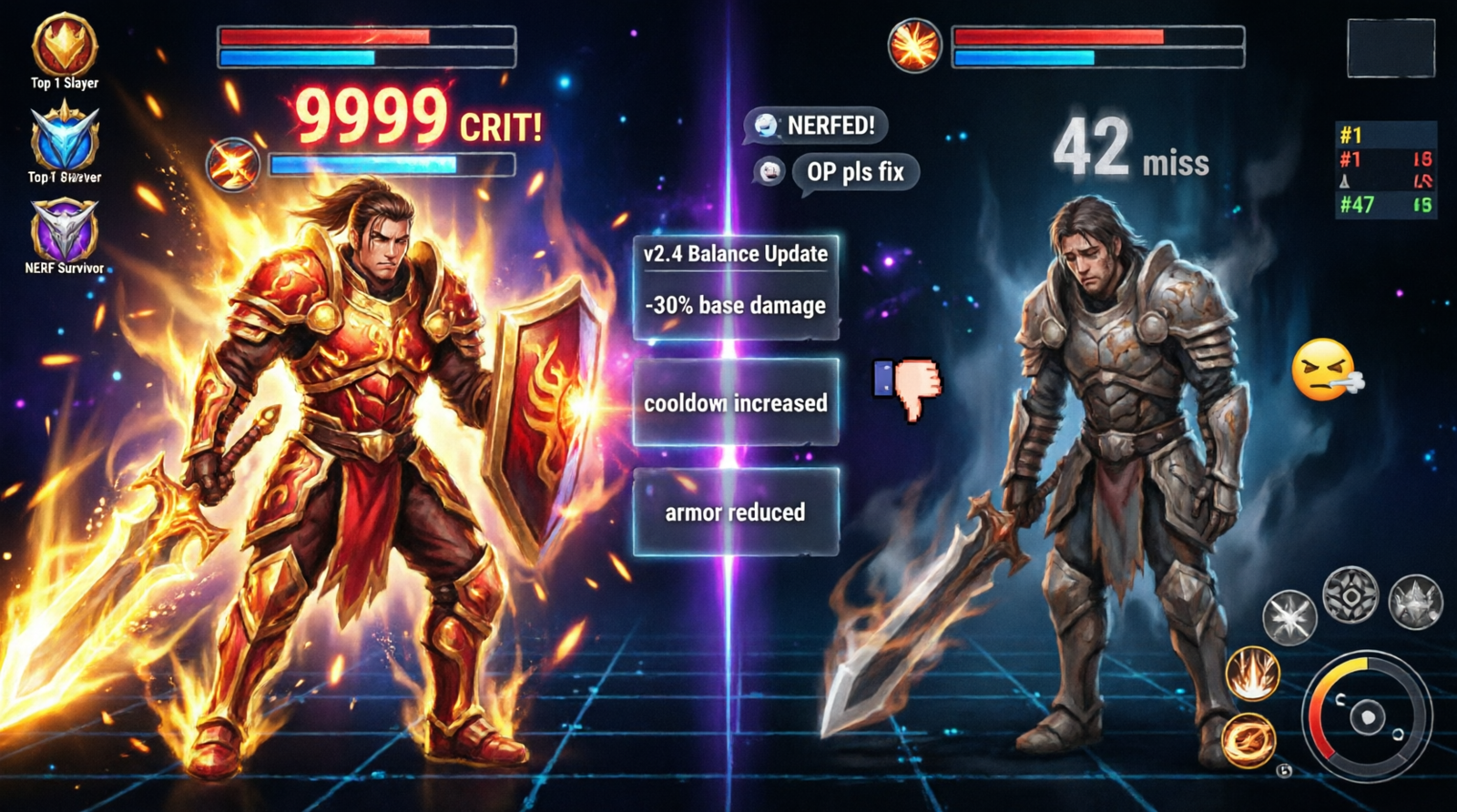
If you’ve ever played an online game, watched a Twitch stream, or browsed gaming discussions on Reddit or Discord, you’ve probably seen someone complain that a weapon or character got nerfed. It’s one of the most common words in gaming, yet many people outside that world aren’t entirely sure what it means.
The interesting part is that nerf doesn’t belong only to gamers anymore. Tech reviewers say software updates nerfed battery life. Social media users joke that an app nerfed its free features. Even sports fans sometimes say a rule change nerfed a team’s strategy.
Then there’s the original meaning. Millions of people know Nerf as the toy brand that makes colorful foam dart blasters.
So which meaning is correct?
Actually, both are.
The meaning depends entirely on the situation. In gaming, nerf refers to making something intentionally weaker to improve balance. Outside gaming, it’s become a popular slang word for anything that’s been reduced, downgraded, or made less effective.
In this guide, you’ll learn what nerf means, where the term came from, why developers nerf characters and weapons, how people use it online, and why it has become one of the internet’s favorite gaming expressions.
What Does Nerf Mean?
The simplest definition is this:
Nerf means to intentionally reduce the strength, effectiveness, or performance of something.
Most people first encounter the word while playing multiplayer games, but its meaning has expanded well beyond gaming.
Here’s how it changes depending on the context.
| Context | Meaning | Example |
|---|---|---|
| Gaming | Making a weapon, character, or ability weaker | They nerfed the sniper rifle. |
| Internet slang | Something became less useful or powerful | The latest update nerfed my phone. |
| Technology | Features or performance were reduced | They nerfed the free version. |
| Toy brand | A company that makes foam dart blasters and sports toys | My nephew got a new Nerf blaster. |
Across every situation, one idea stays the same.
Something isn’t as strong or useful as it used to be.
Quick Answer
If someone asks, What does nerf mean?, here’s the short answer:
Nerf means making something weaker on purpose.
In gaming, developers nerf weapons, characters, abilities, or items to make gameplay more balanced.
Outside gaming, people use the word to describe almost anything that has lost power, usefulness, or features.
For example:
- They nerfed my favorite character.
- The software update nerfed battery life.
- The restaurant completely nerfed its portion sizes.
Even though these examples come from different situations, they all share the same basic idea. Something that used to perform better now performs worse.
How Do You Pronounce Nerf?
Luckily, it’s one of the easiest gaming words to pronounce.
Nerf is pronounced:
/nɜːrf/
It rhymes with words like:
- Surf
- Turf
- Smurf
It’s a single-syllable word, making it quick and easy to say during conversations or while gaming.
Is Nerf a Verb or a Noun?
One reason the word has become so popular is its flexibility. Depending on the sentence, it works as both a verb and a noun.
As a Verb
This is the way you’ll see it used most often.
Examples:
- They nerfed the shotgun after the latest update.
- The developers nerf overpowered weapons every season.
- They nerfed healing because matches were lasting too long.
Here, nerf means to intentionally weaken something.
As a Noun
Gamers also use nerf to describe the balance change itself.
For example:
- That weapon received a huge nerf.
- The latest patch includes several nerfs.
- This character still needs another nerf.
In these examples, a nerf refers to the actual reduction in power rather than the action.
Where Did the Word Nerf Come From?
Many people assume the word was invented by gamers.
It wasn’t.
The story actually begins with the Nerf toy brand.
Introduced in the late 1960s, Nerf became famous for making soft foam footballs, dart blasters, and indoor sports toys. Unlike traditional toy guns, Nerf products fired harmless foam darts that couldn’t do much damage.
Years later, multiplayer games started becoming popular.
Players noticed that developers sometimes reduced the power of certain weapons after updates. A rocket launcher that once destroyed enemies easily might suddenly feel much weaker.
Gamers joked that the weapon now hit like a Nerf blaster instead of a real rocket launcher.
Eventually, they stopped making the full comparison.
Instead of saying the weapon felt like a Nerf gun, players simply said it got nerfed.
The shorter version caught on quickly.
By the late 1990s, players across different online games were using the term, and it soon became a permanent part of gaming vocabulary.
Today, millions of people say nerf without realizing it originally came from a children’s toy brand.
A Short History of Nerf
The word didn’t become popular overnight.
Its meaning evolved over several decades.
1969
The Nerf brand launches with soft indoor sports toys designed to be safe for children.
1980s
Foam footballs and other Nerf toys become household favorites around the world.
Early 1990s
Online multiplayer games begin attracting large communities.
Players start comparing weakened weapons to harmless Nerf toys.
Late 1990s
Massively multiplayer games and online shooters spread the expression to millions of players.
Developers release frequent balance updates, making the word even more common.
2000s
Competitive gaming grows rapidly.
Nerf becomes standard gaming terminology and appears regularly in forums, strategy guides, and patch discussions.
2010s
Streaming platforms like Twitch, YouTube, and Discord introduce gaming vocabulary to a much larger audience.
People who don’t even play games begin using the word.
Today
You’ll find nerf in places far beyond gaming.
People use it when talking about:
- Software updates
- Mobile apps
- Subscription services
- AI tools
- Social media platforms
- Sports
- Technology
- Everyday conversations
What started as gaming slang has become part of internet culture.
What Does Nerfed Mean?
You’ll often hear people say:
- My favorite hero got nerfed.
- They nerfed the shotgun.
- Healing was nerfed.
- The new update nerfed movement speed.
In every case, nerfed simply means made weaker than before through an intentional change.
That doesn’t always mean the weapon or character became useless.
Sometimes the adjustment is tiny.
For example, developers might reduce damage by five percent or slightly increase an ability’s cooldown.
Other times, the change is dramatic enough that players abandon the weapon completely.
Either way, gamers describe the adjustment by saying it was nerfed.
What Does Nerf Mean in Gaming?
Gaming is where the word appears most often.
In competitive games, developers constantly watch how players use weapons, characters, abilities, vehicles, and equipment.
If one option becomes much stronger than everything else, it can make the game repetitive.
Imagine a shooter where one rifle defeats opponents twice as fast as every other weapon.
Before long, almost everyone starts using that rifle.
Matches become predictable.
Experimenting with different strategies no longer feels worthwhile because one option clearly outperforms the rest.
To fix the problem, developers reduce that weapon’s effectiveness.
Players simply say:
They finally nerfed it.
A nerf can affect almost any part of a game, including:
- Weapon damage
- Fire rate
- Reload speed
- Accuracy
- Character health
- Armor
- Movement speed
- Ability cooldowns
- Healing power
- Critical hit chance
- Range
- Mana costs
- Ammunition capacity
Sometimes only one number changes.
Other times, developers make several adjustments at once, creating what players call a major nerf.
In competitive gaming, balance is never permanent. As new strategies emerge and players discover stronger combinations, developers continue making adjustments to keep the experience fair and enjoyable for everyone.
Why Do Game Developers Nerf Things?
Every competitive game faces the same challenge. Given enough time, players will figure out the strongest weapon, character, or strategy. Once that happens, everyone starts using it.
Think about a multiplayer shooter where one assault rifle has almost no recoil, deals the highest damage, and reloads faster than every other gun. There would be little reason to choose anything else.
That’s where balancing comes in.
Developers regularly study gameplay statistics and adjust parts of the game to prevent one option from dominating. Reducing the power of something that has become too strong is called a nerf.
The goal isn’t to frustrate players. It’s to make matches more competitive and encourage different playstyles.
A balanced game gives players meaningful choices instead of forcing everyone to follow the same strategy.
How Do Developers Decide What Needs a Nerf?
Balance changes aren’t usually based on random complaints.
Modern game studios collect huge amounts of data every day. They monitor things like:
- Win rates
- Pick rates
- Ban rates
- Damage dealt
- Survival time
- Match duration
- Player feedback
- Professional tournament results
- Community discussions
Imagine a character that appears in 85 percent of ranked matches and wins significantly more often than everyone else.
That’s usually a sign something is too strong.
Developers may lower that character’s damage, increase ability cooldowns, reduce health, or adjust other stats to bring it closer to the rest of the roster.
Sometimes these changes are small. Other times they’re significant enough to reshape the entire game.
Why Players Ask for Nerfs
Gamers love finding powerful combinations.
But when one strategy becomes too dominant, frustration starts to build.
You’ll often see comments like:
- That shotgun needs a nerf.
- This boss is completely broken.
- Please nerf this hero already.
- Everyone is abusing the same build.
These complaints aren’t always negative.
Many players simply want more variety.
If every match looks the same because everyone is using identical characters or weapons, the game becomes less interesting over time.
A good nerf helps bring different strategies back into play.
Nerf vs Buff
If nerf is one of the most common gaming words, buff is probably the second.
The two are complete opposites.
| Term | Meaning | Example |
|---|---|---|
| Nerf | Makes something weaker | Damage reduced by 20 percent |
| Buff | Makes something stronger | Healing increased by 15 percent |
Imagine a game with ten playable characters.
One character wins far too often.
Another struggles because it’s too weak.
Instead of only nerfing the strongest character, developers might also buff the weakest one.
This creates a healthier balance across the entire game.
You’ll often hear players say things like:
- They buffed my favorite hero.
- The latest patch nerfed the sniper.
- This update has more buffs than nerfs.
Nerf vs Debuff
These words sound similar, but they mean completely different things.
| Nerf | Debuff |
|---|---|
| Permanent balance change | Temporary negative effect |
| Applied by developers | Happens during gameplay |
| Affects every player | Usually affects one character |
| Lasts until another update | Ends after a short time |
For example:
A game update permanently lowers the damage of a sword.
That’s a nerf.
Now imagine an enemy casts a spell that slows your character for ten seconds.
That’s a debuff.
One changes the game itself.
The other affects gameplay temporarily.
Nerf vs Patch
Another common misunderstanding is thinking every patch is a nerf.
That’s not true.
A patch is simply an update released by the developers.
It can include:
- Bug fixes
- Performance improvements
- New maps
- New characters
- New skins
- Events
- Balance adjustments
- Buffs
- Nerfs
Every nerf arrives through a patch.
But most patches include much more than balance changes.
Different Types of Nerfs
Not every nerf has the same impact.
Over the years, gamers have created different names for different kinds of balance changes.
Hard Nerf
A hard nerf dramatically reduces power.
Examples include:
- Damage reduced by 30 percent
- Health cut in half
- Ability completely redesigned
- Cooldown doubled
- Range heavily reduced
When players say a weapon was nerfed into the ground, they’re usually talking about a hard nerf.
The item goes from being one of the strongest choices to one of the weakest.
Soft Nerf
A soft nerf is much smaller.
Examples include:
- Reload speed increased slightly
- Small damage reduction
- Tiny accuracy decrease
- Cooldown extended by one second
At first glance these changes might seem unimportant.
But in competitive games, even small adjustments can completely change how people play.
Professional players often notice soft nerfs immediately because tiny differences matter at high skill levels.
Shadow Nerf
Sometimes players notice something feels weaker, but the developers never mention any changes.
This is called a shadow nerf.
Examples might include:
- Lower item drop rates
- Reduced weapon accuracy
- Shorter ability range
- Slower movement speed
Because there are no official notes, players usually discover these changes through testing or by comparing gameplay before and after an update.
Shadow nerfs often become hot topics on Reddit and gaming forums.
Stealth Nerf
A stealth nerf is very similar to a shadow nerf.
The adjustment either isn’t announced clearly or is buried deep inside lengthy patch notes.
Many players don’t notice until someone posts side-by-side comparisons online.
Indirect Nerf
Not every nerf changes a character directly.
Sometimes another part of the game changes first.
Imagine a hero who depends on a powerful sniper rifle.
If developers reduce the rifle’s damage, that hero automatically becomes weaker.
Even though the hero wasn’t changed, players still call it an indirect nerf.
Reverse Nerf
Occasionally developers realize they went too far.
If players stop using a weapon entirely because it became too weak, the next update may restore some of its lost power.
Players often call this a reverse nerf.
Technically it’s a buff, but the phrase remains popular because it reverses an earlier balance decision.
Real Examples from Popular Games
Almost every live-service game uses nerfs to keep gameplay balanced.
Here are a few familiar examples.
Fortnite
Whenever one shotgun or assault rifle dominates matches, players immediately start predicting a nerf.
You’ll often read comments like:
That shotgun won’t survive the next update.
Or:
It’s definitely getting nerfed next season.
Call of Duty
Each seasonal update adjusts weapon balance.
A gun with extremely high damage or very low recoil often receives changes after dominating multiplayer matches.
Players then spend weeks testing which weapon is strongest after the latest patch.
Apex Legends
Respawn Entertainment frequently tweaks both Legends and weapons.
A single balance update can completely change which characters become popular during ranked play.
Valorant
Agents, abilities, and weapons are adjusted regularly.
If one Agent appears in nearly every professional tournament, balance changes usually follow.
League of Legends
League has been using buffs and nerfs for years.
Champion win rates, professional matches, and player feedback all influence future balance updates.
Some champions receive only tiny adjustments.
Others are completely redesigned after repeated nerfs fail to solve balance issues.
Overwatch 2
Hero balance is one of the biggest topics in the Overwatch community.
A small reduction in damage or healing can shift the competitive meta almost overnight.
Marvel Rivals
As new heroes join the roster, balance updates become even more important.
Developers frequently buff underperforming heroes while nerfing those with unusually high win rates.
How Nerf Became Internet Slang
Gaming helped popularize the word, but that’s no longer the only place you’ll hear it.
People now use nerf whenever something becomes less useful than before.
Examples include:
- The latest update nerfed my phone’s battery life.
- They nerfed the free version of the app.
- This restaurant nerfed its portion sizes.
- Social media algorithms nerfed my reach.
- The company basically nerfed customer rewards.
Nobody in these examples is talking about video games.
They’re borrowing gaming language because it perfectly describes something that has been reduced or downgraded.
This kind of crossover happens often with internet slang.
Words that begin in gaming communities eventually spread to social media, workplaces, and everyday conversations.
Today, you’ll find people using nerf on Reddit, Discord, X, YouTube, TikTok, tech blogs, and even in casual conversations with friends.
What Does Nerf Mean in Texting?
Nerf isn’t an abbreviation like LOL or BRB.
Instead, it’s a slang word that gamers naturally use while chatting.
For example:
Alex: This boss is impossible to beat.
Jordan: It’ll probably get nerfed next patch.
Another example:
Emma: They removed most of the free features.
Ryan: Yeah, they totally nerfed the app.
Or this one:
Chris: Everyone keeps using that sniper.
Maya: It definitely needs a nerf.
Because gaming has become so mainstream, plenty of people now understand the word even if they rarely play games themselves.
In group chats, Discord servers, and online communities, nerf has become part of everyday digital language.
Common Synonyms of Nerf
While nerf is the standard word in gaming, people use several other words with a similar meaning depending on the situation.
Some common synonyms include:
- Weaken
- Reduce
- Downgrade
- Tone down
- Scale back
- Decrease
- Limit
- Cut
- Lower
- Balance
These words all suggest making something less powerful or less effective. However, nerf has a more specific meaning because it usually refers to an intentional balance change rather than an accidental decline.
For example:
- The developers weakened the weapon.
- The developers reduced the weapon’s damage.
- The developers nerfed the weapon.
All three sentences are correct, but gamers naturally prefer the third one.
What Is the Opposite of Nerf?
The direct opposite of nerf is buff.
A buff increases the strength or usefulness of something instead of reducing it.
Other words with a similar meaning include:
- Upgrade
- Boost
- Improve
- Strengthen
- Enhance
- Power up
For example:
- The latest update buffed the healer.
- The developers boosted shotgun damage.
- That character became much stronger after the patch.
Game updates often include both buffs and nerfs at the same time to keep gameplay balanced.
Popular Expressions That Use Nerf
Spend enough time in gaming communities and you’ll see these phrases everywhere.
Nerfed Into the Ground
This describes a weapon, character, or ability that became almost useless after an update.
Example:
The sniper was nerfed into the ground.
Players usually say this when they think developers went too far.
Needs a Nerf
People use this phrase when they believe something is too powerful.
Examples:
- That boss needs a nerf.
- This shotgun needs a nerf.
- The new character definitely needs a nerf.
It’s one of the most common comments after a new season launches.
Incoming Nerf
Sometimes players predict balance changes before they’re officially announced.
Example:
After winning every tournament this month, that character has an incoming nerf.
This usually appears on Reddit and Discord whenever one strategy becomes too dominant.
Over-Nerfed
An over-nerfed weapon or character has been weakened more than necessary.
Example:
The developers over-nerfed the SMG. Hardly anyone uses it anymore.
Pre-Nerf
This refers to how something performed before developers reduced its power.
Example:
The pre-nerf version could eliminate opponents in seconds.
Players often compare old gameplay clips with the current version to show how much has changed.
Post-Nerf
This describes the updated version after balance changes.
Example:
The weapon is still competitive in its post-nerf state.
Related Gaming Terms You Should Know
Learning a few related terms makes gaming discussions much easier to follow.
| Term | Meaning |
|---|---|
| Buff | Makes something stronger |
| Debuff | Temporary negative effect during gameplay |
| OP | Overpowered, stronger than intended |
| Meta | The most effective strategies or characters |
| Patch Notes | Official list of update changes |
| DPS | Damage Per Second |
| Cooldown | Time before an ability can be used again |
| PvP | Player versus Player |
| PvE | Player versus Environment |
| Balance Update | Changes made to improve fairness |
If you’re new to gaming, you’ll often see these words appear alongside nerf in patch notes, videos, and online discussions.
Who Uses the Word Nerf?
Although the term started with gamers, its audience has grown significantly.
Today, you’ll hear it from:
- Casual gamers
- Professional esports players
- Twitch streamers
- YouTubers
- Game developers
- Gaming journalists
- Reddit communities
- Discord users
- Tech reviewers
- Software enthusiasts
Even people who rarely play games now use the word when talking about apps, websites, subscriptions, or devices that become less useful after an update.
Common Mistakes People Make
Because nerf has more than one meaning, it’s easy to misunderstand how it’s used.
Confusing the Gaming Meaning With the Toy Brand
When someone says:
The developers nerfed the sniper rifle.
They’re talking about a balance change, not a foam dart blaster.
Context makes all the difference.
Thinking Every Nerf Ruins a Character
Many players panic whenever patch notes mention a nerf.
In reality, plenty of balance changes are minor.
A five percent damage reduction might barely affect gameplay, and some characters remain among the strongest choices even after receiving several nerfs.
Assuming Every Patch Contains a Nerf
Not every game update changes balance.
Many patches focus on:
- Bug fixes
- New content
- Performance improvements
- Cosmetic items
- Events
- Security updates
A nerf is just one possible part of a patch.
Believing Only Multiplayer Games Have Nerfs
Competitive games receive the most balance updates, but they’re not the only ones.
Single-player games sometimes nerf weapons, abilities, or farming methods if developers feel they make progression too easy.
Using Nerf in Formal Writing
Nerf is widely recognized online, but it’s still an informal word.
In academic papers, business reports, or professional documents, words like reduce, weaken, decrease, or limit are usually more appropriate.
Frequently Asked Questions
What does nerf mean in gaming?
In gaming, nerf means reducing the strength or effectiveness of a weapon, character, ability, or item through a balance update. Developers do this to keep gameplay fair and encourage a wider variety of strategies.
Why do developers nerf characters?
Developers nerf characters when they become noticeably stronger than other options. Balance changes help prevent one character or strategy from dominating the game.
What is the opposite of nerf?
The opposite of nerf is buff, which increases the power or effectiveness of something.
What does nerfed mean?
If something was nerfed, its strength or usefulness was intentionally reduced through an update or design change.
What is a shadow nerf?
A shadow nerf is a balance change that isn’t mentioned in official patch notes. Players usually discover it through testing or by noticing differences during gameplay.
What is a stealth nerf?
A stealth nerf is a hidden or poorly communicated balance adjustment. It works much like a shadow nerf, although the exact meaning varies between gaming communities.
Can a nerf be reversed?
Yes. Developers sometimes restore part of an item’s original strength if they decide a previous nerf was too severe. Most players simply call this a buff.
Is Nerf a real company?
Yes. Nerf is a well-known toy brand that produces foam dart blasters, sports toys, water blasters, and other recreational products.
Do all online games have nerfs?
Most live-service multiplayer games receive regular balance updates that include nerfs, buffs, bug fixes, and new content. However, how often these updates happen depends on the game.
Why do players complain about nerfs?
Many players spend weeks or even months mastering a favorite weapon or character. When it becomes weaker, they may feel that all the time they invested has lost some of its value.
Final Thoughts
The word nerf has traveled a long way since it was first associated with foam toys. Today, it’s one of the most recognizable terms in gaming, describing the intentional reduction of a weapon’s, character’s, or ability’s power to keep gameplay balanced and competitive.
Its meaning hasn’t stayed inside games, either. People now use nerf to describe software updates that remove useful features, subscription plans that become less generous, social media algorithms that reduce visibility, and even restaurants that shrink portion sizes. In many online conversations, it’s become shorthand for anything that has been intentionally weakened.
Whether you’re reading patch notes, watching an esports tournament, chatting with friends on Discord, or scrolling through Reddit, you’ll probably come across the word sooner or later. Once you understand what it means and why developers use it, those conversations become much easier to follow.
Gaming has introduced plenty of words into everyday language, but few have spread as widely as nerf. It’s short, memorable, and perfectly captures the idea of taking something powerful and making it just a little less dominant.
